Does Dalrymple know what racism really is?
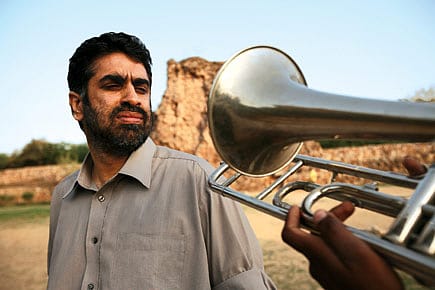
The ‘racism’ charge is absurd, and designed merely to deflect attention from the real issue.
In a piece titled ‘The Literary Raj’ Open ran in the issue dated 10 January 2011, Hartosh Singh Bal argued that India’s life of letters was still beholden to the British. William Dalrymple found the article ‘racist’. Bal joins issue
Debate
Hartosh Singh Bal

Since the original article was published, the Dalrymple bio at the Jaipur Lit Fest website has been amended. The additions in the few days since I wrote my piece are telling. They include the Crossword Prize for Non-Fiction for The Last Mughal, the first Asia House Prize for Asian Literature for Nine Lives and the French Prix D’Astrolable for The Age of Kali. These additions only serve as a tacit admission of the truth of what I had written: ‘This director of an Indian literary festival does not consider it important to mention an Indian prize he may have received or an Indian publication he may have written for. His eyes are trained on the recognition that Britain’s literary world offers (even if there is the hint that commercial success in India has started mattering), and in that recognition lies his strength.’

Given his belated realisation of this truth, Dalrymple’s response becomes even more perplexing. I will ignore the snide remarks and innuendos that so liberally dose his letter, restraining my urge to reply in Punjabi, but I will answer a charge that cannot be glossed over—the charge of racism. This is the second instance recently that we at Open have been subjected to the argumentum ad hominem: Barkha Dutt and some of her supporters have suggested that the case against her was rooted in misogyny, and now William (his letter does imply we are on first-name terms), who has stated that my original article was ‘blatantly racist’. It is a serious charge, designed to deflect attention from the real issue. In elaborating this charge, William exposes the weakness of his case when he states: ‘If anyone was to suggest that Amit Chaudhuri shouldn’t judge the Booker Prize, or direct Britain’s leading creative writing course, because he was too Bengali… it would be regarded as blatantly racist.’

This is a complete misstatement of my premise. The equivalent of what I said would be the claim that ‘the fact that Amit Chaudhuri, a Bengali, judges the Booker Prize’ says something about the British literary scene. Of course, it does: it says something positive about a literary arena that had long been marked by exclusion. In the same way, I have claimed that William’s centrality (whether in Jaipur or otherwise), especially considering how he defines himself, says something about the Indian literary scene, except here it says something negative because the Indian and British literary scenes are not equivalent. The Indian literary scene is marked by a clear sense of inferiority to the British scene, and continues to be beholden to it. For this very reason William becomes a symbol of what is wrong with our literary life. This shouldn’t be difficult to understand. A Black man of Kenyan parentage as President of the US is not the symbolic equivalent of a White man of American parentage (one whose CV focuses only on his achievements in the US) becoming President of Kenya.

My argument about what William’s literary stature suggests may offend, but it is not racist. For a White British man living in a Mehrauli farmhouse (again an issue I have not raised while mentioning him, but one he has invoked) to use this term so loosely is to mock the experience of racism. Perhaps to understand the term he could turn to South Asian immigrants in Britain and ask them what they have faced over two generations (the Scots may have their own history with the English, but they did not reflect this history while relating to people from the Subcontinent either here or in Britain, as William should well know). William ends his response by stating that the ‘piece felt little more than the literary equivalent of pouring shit through an immigrant’s letterbox’. Actually, it possibly couldn’t—because William can never even begin to know what it means to suffer the indignity he so easily cites in his defence. I have had to stand in a London tube as drunk football fans pouring out of a match called into question the race and origins of people such as me. Even that is the mildest possible form of racism; certainly the term does not extend to an article that punctures a man’s vanity.

He then claims that if an English publication ‘published an unflattering cartoon of, say, Naipaul dressed as an English lord, mocking him for setting himself up as a Brown Lat Sahib in Wiltshire, that magazine could potentially be taken to court’. Is he really arguing for an environment where such a cartoon is not allowed? Should I remind him of a few cartoons in Denmark that were absurdly made a test case for freedom of expression? Is, then, William’s case that British writers and Danish cartoonists have a right to offend but require protection against being offended?

The censorious William doesn’t stop here. He suggests I do not believe half of what I have written. He can keep hoping. Strangely, he doesn’t seem to understand that one of the points of the article is that I do not want people like him speaking for me. Nor does he seem to understand that the article was designed to offend, but that it was designed to offend the Indian sense of literary worth. In reacting so, he gives himself far too much importance; perhaps he cannot yield centrestage even in this instance. If he could just go back and pay attention to what I actually said, he would realise that he, as an individual, remains peripheral to the thrust of the article.

Much has also been made by him and others of the diversity or range of the Jaipur festival. That in no way takes away from the point I am making. In the same way that the need for equal-opportunity employment betrays an unequal society, the need to stress this aspect only emphasises that the people who remain the focus of attention at the festival are not homegrown. When William cites the presence of JM Coetzee and Orhan Pamuk this year to claim how international the festival is, he again begs my argument. We needed the English newspapers and critics to elaborate their greatness before we came to accept it. They have been filtered to us through Britain; if we were a thriving literary culture, looking at the world instead of Britain, we would have known of Pamuk and Coetzee long before the British told us they mattered, because in reality Pamuk and Coetzee address us far more directly. If Pamuk had come to India before such endorsement came his way, we would not have noticed him. 

All this said, I am more than willing to accept William’s offer of a drink in Jaipur. With a caveat. I can pay my own way, I can find my own place to stay, but I cannot stop at one drink. If William is willing to extend a Scot’s parsimony (this may be prejudice but is not racism) to match a Sikh’s appetite for drink, we are on. Let him state the date and time.

OLDER COMMENTS FIRST

46 COMMENTS

Permalink

Spot On! The original article, the way I read it, was meant as an indictment of the Indian english writing/reading community and NOT Dalrymple (did I get the name right?). But in response many commentors (some claiming to be writers etc.) below the line have risen to defend him(or Him)! Thereby missing the point entirely and proving your argument.
Typical Indians, I say. We are like this only.

This is analogous to how Indians on receiving foreign awards (Arundhati Roy, Amartya Sen) suddenly become celebrated intellectuals. Even though these awards (Booker, Nobel) had nothing to do with the socio-political scene in India, we put them on a pedestal, and like Pavlov's salivating dogs, nod at their every pronouncement.

14 January 2011 | sid

Permalink

But you also seem to be missing the larger picture. Indian english itself is a colonial legacy. No wonder we always seek approval from western shores. This whole episode reminds one of a servant asking his master to treat him as an equal.

14 January 2011 | Sachin

Permalink

I like the fact that people from around the world now live in Delhi as equal citizens in a cosmopolitan city. Mr Dalrymple, who has been here for decades, is a Dilliwallah now.

However Hartosh's point about the perceived superiority of the Western literary world is difficult to ignore. It is a perception held by Indians as much as Westerners. Some of it may even have basis in fact, but the superiority is born of inherited privilege. For example, it is easy for a person spending pounds or dollars to travel around India or Africa for a year, doing research for a book. They can afford to put in the time. Most of us who earn in rupees and lack trust funds cannot. If the Western authors then come out with books on India it is not because they know the country better or have greater ability, but because they could afford to write the book. It is not a level playing field.

14 January 2011 | Samrat

Permalink

Even though I may not agree fully with Hartosh's original piece, I am in complete agreement with his rejoinder to William Darlymple. Shouting racism, communalism, misogyny as a defence is the easiest way out for those in indefensible positions. When 'Occidental' observers make generalizations about alien cultures, a piece of travel writing is born. But dare to pick holes in their argument, then you are promptly dubbed as a bigot or whatnot Yes Mr. Darlymple, its often scary when the mirror starts staring back.

14 January 2011 | Ambarish

Permalink

Mr. Bal, do you understand the definition of racism? I don't think many of us Indians do. We say things that are inadvertently racist. And that piece, Sir, was racist.
As for a colonial hangover and Mr. Dalrymple not mentioning any Indian award, get a life and stop picking on nonissues.
To see someone seep into a different culture is heartening, worldwide. And I appreciate Mr. Dalrymple's efforts and work.
You were holding back the urge to reply in Punjabi in the article -- framing a sentence like that is SO Indian. Is that racist? I believe it is. But for you, it's probably just a harmless generalization.

14 January 2011 | Dee

Permalink

cheers!

14 January 2011 | jay

Permalink

Take the scot on Sardar.More strength to your pen.

14 January 2011 | debasisha

Permalink

I love W's work. He is far more Indian than most of the people around me who would escape to amreeka the day they get their visa and tickets.
Sir, you should be ashamed of pointing fingers and discrediting his work simple because he wasn't born here.

If u think some India born should have started the festival instead, go do it. The reason one looks at Eng for evaluation of English writing is perhaps the same reason why Cannes has more value than Filmfare.

i am surprised such a piece was published in Open.
i think i have to reevaluate how i feel about the magazine editors. I guess they are becoming limelight hungry after Barkhagate exposure.

14 January 2011 | PR

Permalink

In complete agreement with Hartosh Bal's response. There is a tyranny of taste that flows through the "lit establishment" as it were, and one deeply influenced by the British sense of literary merit. Certainly the Lit fest is a means of extending that understanding. Also the fest generously referred to as a "literary mela" is nothing more than an AVON ladies networking social, with everyone pushing their wares to the few and regular gora agent, editor or publisher. Favorable for those who seek western endorsement. The "desi" participants seem to make cyclical appearances and are part of a lit circle that endorses mediocre talent using avenues as insular as Jaipur to toss them up for relevance. To assume a great service is being done...is to assume too much. Even the choice of city to host the festival...reeks of a certain exotic positioning to the western eye. It's not racism, it's seeing it for what it is.

14 January 2011 | Sahil

Permalink

Let's face it, most Indian authors writing in English is of very poor quality (with some very honourable exceptions). Either their quality of English is bad (case in point Chetan Bhagat or any of the books by Shristhi Publishers) or the content is trite and boring (most of the management types trying to write books). In such a scenario, I would still prefer to read books which have the approval of the Brits including someone like Dalrymple who writes engagingly and is erudite.

14 January 2011 | Jhumpa

Permalink

Hartosh Singh is spot on about all the points he raised, though I disagree with his central premise – India’s life of letters is still beholden to the British. India's life of letters is in fact beholden to the Indian state as represented by various politicians and babus, no matter how illiterate and incompetent they may be. It is after all the state that runs most of the literary establishments (awards, university programmes, grants, libraries etc) in India. Thus the increasing presence of the embedded critic, the poet-politician, the diplomat-novelist etc. in our literary landscape. It is only what is left, the far and few private initiatives that exist more in the media than on the ground and of which the Jaipur Literary Fest is a fine example, that are beholden to one sponsor or one mindset, as the case may be. Personally I don't grudge Dalrymple and his Mehrauli farmhouse. Great that at least one writer can have a fine lifestyle supported by his books. My gripe is that New Delhi, the city of several billionaires as well as a cash-rich government has invested much in infrastructure over the last two decades but little in libraries and furthering a reading culture. That the last time our Prime Minister found time to release a poetry book was for one with his own ministers' SMS poems.

15 January 2011 | Vijay S. Jodha

Permalink

Poor show Mr. Bal. You wrote the piece, now please take responsibility for it.

15 January 2011 | U

Permalink

You shouldn't have restrained the urge to reply in Punjabi because I suspect that is pretty much the only thing you can do with any coherence. It seems that you are just taking out some personal grouse against WD under the guise of criticizing the literature scene in India. I am sure you will disappear from the collective consciousness pretty soon but it is really disappointing to see the Open Magazine publish such drivel.

15 January 2011 | dog5011

Permalink

This entire debate reminds me of the much trashed former defence minister V K Krishna Menon's retort when one English diplomat sarcastically complimented him for his excellent command over the English language.

Pat came the sarcastic reply from Menon, "My English is obviously excellent because I have spent years of practice in mastering it. Unlike you, for whom the language is merely an accident of your birth."

15 January 2011 | Harish C Menon

Permalink

Who knows Hartosh Bal, but we all know Mr Dalrymple! Going by the above argument it would be easy, but stupid and dangerous to dismiss Bal's argument. Perhaps he needn't have drawn Dalrymple into this to the extent he has, and almost extended the invitation to Dalrymple to accept the centre stage, that Dalrymple, once again, promptly has.

However, the point remains that we Indians should be aware of how we are influenced by the Western accolades and recognition even 60 years after decolonisation. This is a fact we can ignore only to our peril. We have been victims of colonisation and we still are. Now it depends on whether we chose to recognise it as problematic, or make it the status quo. Now that everything from foreign policy to cultural recognition is so obviously (but at times implicitly) dictated by what the Western world thinks, perhaps we should focus on the real argument behind this controversy on the Open magazine, which by the way, has been shrewd enough to make sure that the readers keep receiving a series of sawaal-jawaabs and remain glued to its pages! I like it! Congrats! And looking forward to a response to this piece by Bal from another literary middleweight!

But back to the point, what do we do? Adopt the N'Gugi way? Try and become 'at par' with the West? Die of inferiority? Any love for our country and our culture has ended with 1947. We need a war or a cricket match with Pakistan to bolster our 'patriotism'. We don’t want balanced development, but we want to become a Superpower. The days of Gandhism and Non Alignment are over, so now we need a few rockets in space and some nuclear bombs, so the West takes us seriously. What can we do? Have been thinking about this for years… Any answers?

15 January 2011 | Avinandan Mukherjee

Permalink

Hartosh's column raised a very valid point about the colonial hangover of Indian literary community. I do not think that it was targeted at anybody- WD just happened to be mentioned alongside. He didn't have to get so defensive about it & when did Hartosh attack his efforts to organize the DSC festival. All he did, was object to the choice of invitees based on their "British Achievements" which appeared to have struck a raw nerve.
Grow up Brits- all criticism of white guys by browns is not directed against their skin color! Just because "Fair & lovely" sells hot in India, it doesn't mean that we, browns resent everything that is "White & Brit"! Learn to take a healthy criticism Mr. WD from people who can dish out one.

15 January 2011 | Aparna

Permalink

Thanks, Mr. Bal. I wish I could agree with your perspective in this circumstance, but I cannot. Being critical of British literary circles is mudslinging in my view. In fact, as an Indian-American artist, I'd like to draw your attention to an aspect of our politics here in the United States that you and other folks in India and other places conveniently like to overlook -- that President Obama is as much white as he is black -- and this matters.

It matters because as Americans we accept we are a nation of white, black, Latin, Indian people and others -- we don't seek to exclude or offend whites from our national discussions. We recognize their contributions and, when necessary, criticize their points of view. But there is an emphasis on respecting individuals for who they are and for their work, on its own terms, rather than for what they represent -- in this case, mudslinging at William Dalrymple and his literary festival in Jaipur is an easy way for an artist to score political points with his community.

Colonialism has thankfully passed. But while it stood, Indians who led the charge had close white friends. Abolitionists who fought to displace southern landowners, the ones who owned slaves, were white. There has traditionally been a partnership between the races when real progress was made in areas that appear to have piqued your interest. Emancipation, that notion that you appear openly to endorse, is a hard bargain perhaps to comprehend, but it tends to be a long road that begins once you liberate yourself from your own self-esteem.

The fact that Pamuk is now respected in India is a step forward in the right direction -- and is the product of a marriage between British and Indian literary cultures -- one that certainly started with the British Raj, but that has continued since Indian independence into the present day. This is not a small matter; it is a deep, devoted and close relationship on both sides, unsettling for some -- but one that has made Pamuk's ascent possible.

16 January 2011 | Anonymous

Permalink

Awesome rebuttal. Hartosh is on the way to creating his own fan club...

16 January 2011 | Dinesh

Permalink

I think the author has a point, this festival is simply marketing exercise for this particular genre of writing. In the UK the media will bring on William Dalrymple to comment on any subcontinental issue, now that Mark Tully has retired. I have never seen an Indian commenting on e.g on the last election, on the BBC in prime time news.

This article is not racist.

16 January 2011 | ts

Permalink

a good reply to WD's self pitying article.

16 January 2011 | ts

Permalink

The issue here, i would think, is not that of 'a' willaim dalrymple', or a jaipur litt fest with its glitz quotient. The issue here is, do these events deserve the kind of attention they get? I don't know about literature, but publishing is an industry, and it is functioning as one. as for, authors reaching Indian readers after being filtered in UK, isn't that a mere extension of our consumption pattern? If WD was not a 'white' import, but say, an African Indophile, with much more substantial work (I havn't read WD and won't know how substantial his work is), would he be living in a a farm house in Mehrauli, sketching inspiration litt fests and endorsing new authors?

The problem is not with "Indian Literary scene". Out literary scene is vast and elusive and unknown. "India" does not need the glam litt fests, It maybe does not participate in them either. But that should not be construed as a corollary.
Publishing houses tell the writers what sell. The mktg houses do not give the space for readers to stumble upon and discover their authors. So...this is a phase we are in

Don't make people like WD more important than they are. Don't make the glam litt fests more important than they are; well if something good comes of these things then, well thats good.

Yeah, WD's allegorys on racism and reverse racism were amusing...and so were yours...but, maybe it just goes to indicate the narrow scope of thought processes here.

if we were to get into it, then we have just too many unanswered questions - why is India not reading authors who don't belong to the upper class/caste? whys is India not reading, even reviews, of books that are not set in Maximum cities, or about the NRI in west saga, (even if they do make for good reading)?

The real questions to be raised would then be too many and I am not suggesting that your article should have raised them, but if literature, Indian Writing and Indian Writers is a subject of concern, then maybe you take a few steps back, but of course, they might not sell as much as a WD would!

On a different note, would media houses risk working without their pin up boys and girls? Even though the writer Mahashweta DEvi had volunteered to be mediate between the Naxals and the state, just how many magazines actually bothered to speak o her?

Thnx!

16 January 2011 | vasanthi

Permalink

Mr. Bal,

Please note, you write in English and refrain from using Punjabi.

16 January 2011 | Jihadi

Permalink

You rock Hartosh Singh Bal

17 January 2011 | DD

Permalink

Hartosh Singh Bal's latest salvo -- and his first in Indian letters as a chest-thumping, hard-drinking Sardar, a persona that was only implicit in his earlier detonations -- seems to me to make no other point than that he is spoiling for a fight. Reading his "rebuttal", I could hear the nagada drum booming violently in every paragraph.

What seems most suspicious about Bal's piece is that, although he insists that his argument is more about a larger issue than about personalities, he loses no opportunity to drag the debate down to just that: a wrestle in the akhada or a guzzle-contest in the bar. In his conclusion, he might have re-emphasised that, in making the arguments he does, he had the good of Indian literature at heart. Instead, we got a gust of hot air about Sikhs and Scots.

There seems little point in trying to refute any of Bal's allegations and insinuations, as it seems clear from these pieces that he's not one to admit that he's anything other than one hundred per cent right. It was only if his piece had been properly reasoned to begin with that one could have had a reasoned debate with him.

I'd just like to make a few remarks about the point at which Bal says, of Dalrymple and Jaipur: "Much has also been made by him and others of the diversity or range of the Jaipur festival. That in no way takes away from the point I am making. In the same way that the need for equal-opportunity employment betrays an unequal society, the need to stress this aspect only emphasises that the people who remain the focus of attention at the festival are not homegrown."

Having been to the Jaipur Literaure Festival four of the five years it has been in existence (including the first year, when it had tiny audiences of 40 or 50 people at most events), I'd like to say that Bal's comparision of the festival programme to "equal-opportunity employment" is not just unfair but deliberately (and predictably) disingenuous, particularly since he has never been to the event himself and relies, for his allegations, on hearsay.

Over the years I've gone with my notebook and pen to many of what, after Bal, one would have to call the "homegrown" events at the festival, and profited enormously from listening to Sheldon Pollock on the Sanskrit literary cosmopolis of a thousand years ago and Arvind Krishna Mehrotra on the state of Indian literary criticism, watching Naveen Kishore's film on Mahasweta Devi, learning from S.Anand and Omprakash Valmiki talk about Dalit literature. and hearing the electric sounds of Mahmood Farooqui and Danish Husain at work on their dastangoi, the gravelly voice of Gulzar reading his poems, and the beautiful cadences and wit and rhetorical flair of Ashok Vajpeyi's Hindi.
In my experience, if there is a space where the festival is distorted, it's in its representation in the Indian media, which reports mostly on the big-name authors and ignores all the other riches on view, riches the worth of which our newspapers and magazines (and here OPEN is as guilty as anybody) should be doing their best to communicate to the lay reader.

I'd even meet Bal halfway, and grant that, buried deep somewhere in his unpersuasive and splenetic piece, he has a point about the larger power dynamics of Indian literature and publishing.

But if Bal really feels so passionately about Indian literature and how it remains a kind of satellite of the London literary establishment, looking westward for all its cues, then one would expect to see from his pen, alongside the work of attacking deeply entrenched interests and biases, pieces that advance the appreciation of actual Indian novels, plays, or poems, or that champion Indian writers who are unfairly neglected. But the only reading of an actual text that he offers anywhere in his work is that of William Dalrymple's bio on the festival website, one that he gleefully brings up again and again, as if by tracking it all our doubts and amiguities can be magically resolved. This is just juvenile.

I've read some of Bal's other work (such as the essay on the Narmada river and Gond tribal narratives and artworks that he published in the Asia Literary Review in 2008), and found him, in this avatar, to be a much more complex and subtle writer than he comes across as being here. I'd like to submit (at the risk of discovering that Bal can no longer restrain his urge to reply in Punjabi) that, in crude and jeering pieces like this one, Bal is not only being unfair to William Dalrymple and the Jaipur Literary Festival, he is first and foremost being unfair to himself.

17 January 2011 | Chandrahas Choudhury

Permalink

I think there are three problems with Hartosh Bal's piece.

First, it doesn't acknowledge that much of Indian writing in English is really rubbish and that include a lot of journalistic writing as well. Maybe, both Indian and foreign readers prefer to read Britsh writers on India because a well-written copy is far more acceptable than a more authentic but poorly written one.

Second, it ignores the role that the British Council has played in encouraging a cultural scene in English language in India. For the longest time, it was the only platform any writer in English (Indian or otherwise) or his reader had for book readings, launches and discussions. As a corollary that meant that British writers also got a lot of attention. That could simply explain why British authors are more visible than American ones. American Cultural Centre just didn't engage with the cultural scene in India.

Third, whether it comes to literary credentials, knowledge of Indian culture, or networking capabilities, Darymple is uniquely suited to head a literary event in India.

For more this, read my blog http://bit.ly/eoBtkJ

17 January 2011 | chetna prakash

Permalink

Spot on!

The point that Mr. Bal is making is not about Mr. Dalrymple. It never was. Therefore it cannot be read as "reverse racism" as Dalrymple suggests. I am so fed up of the charges of reverse racism when (forgive the pun) "The Empire Writes Back". In this subtle piece "The Literary Raj", what Bal sought to point out is really quite simple: the sense of felt inferiority in the Indian literary scene when faced with the British literary establishment and he gives examples of this through comments on what is of literary merit in India. This Mr. Bal is the Brown/Black/White face of postcolonialism. Mr. Dalrymple's response is/was yet another centring of Self by a British writer who obviously sees "Bristishdom" as central to our literary existence. Oh, just for the record, and as a Trinidadian, it is interesting to see that they both agree on Sir Vidia's complete lack of Trinidadianess. Mr. Dalrymple, I fear that you completely missed the train (of thought) on Mr. Bal's commentary on the internalisation of racism, again not by people such as yourself but rather by his own.

18 January 2011 | Nicole Roberts

Permalink

Perhaps if Indian publishers actually paid decent money to authors, instead of the pathetically low rates they currently offer, and if the majority of Indians actually wanted to read books of a quality superior to Chetan Bhagat's offerings, we'd have a thriving Indian literary scene to match that of Britain and other nations. But we don't. I don't see how we can blame anyone else but ourselves for the state of our literary culture.

18 January 2011 | Biggibbon

Permalink

Great going guys (Hartosh & WD)!!!
Please don't stop here, i am enjoying every bit of this classic debate :)

Jokes apart...
What you wrote makes lots of sense Hartosh. There is definitely this mindset in India where "phoren" things are considered to be superior to local counterparts. A few days back an article was published here in OPEN by Aravind Adiga where he was trying to find Greek architectural philosophy in 'ancient Indian architecture', and almost criticized it for not able to to find it here in India. I was surprised to find out this point of view from a so called Indian intellectual (Even wrote an email to him but never got the reply).
Till date I am not able to understand that why Indian architecture should be criticized if it was not made keeping Greek Philosophy in mind (which obviously is not possible). Why Mr. Adiga was not able to praise the philosophy with which Indian architecture was built is also a question, answer to which can be found in your original article.
So I totally agree with your original article, and also agree that Mr. WD can not realize what racism is.

18 January 2011 | AKS

Permalink

Dear Mr Manu Joseph,
I have been reading with interest and a growing sense of dismay, articles and rebuttals being issued by Mr. William Dalrymple on the Jaipur Literature festival, its origins and now finally on his version of how he thinks the festival is successfully executed. Most of this has been printed in Open and now in his latest interview to the Crest Edition of the Times of India.
The time is perhaps now right to clean up the current spate of ‘post colonial’ whitewashing that Mr. Dalrymple seems to be indulging in. For the record, the festival was NOT conceived or Co-directed by him or Ms. Namita Gokhale for that matter when it was started in 2006. That honour if you were indeed to call it one, would rest solely on myself as the first Director of the Jaipur Virasat Foundation and of the Jaipur Literature Festival 2006. The literature festival was conceived during discussions on a drive back to Jaipur from Delhi with Ms. Faith Singh the founder of the Jaipur Virasat Foundation and Ms. Di Robson our then International Festival advisor.
Ms. Gokhale to her credit has always acknowledged this, though for some reason it seems to be a rather uncomfortable truth for Mr. Dalrymple to accept. This year it seems to be getting even more unpalatable for him as can be seen in his polemic “The piece you ran is blatantly racist”. Or perhaps it’s just a bit of inconvenient truth that he would like to air brush out of history, completely once and for all when he repeatedly goes on to state that “ I conceived, co-founded and co-direct the Jaipur Literature Festival…” The truth is anyway out in the public domain if one were to look at the 2006 literature festival brochures and pamphlets. Mr. Dalrymple and Ms. Gokhale are listed purely as advisors to the festival.
My concern now turns to incredulity when I see his latest interview in the ‘Times of India’s Crest edition’ dated 15th January when the self proclaimed declares and I quote “
The USP is, there's nothing sarkari, official or even professional about it. We don't even have an office. There are no full-time paid members of staff. Festivals like Sydney have a full-time director and support staff. We don't even have a telephone! This is run via four Blackberries, basically friends doing this from their bedrooms. But it's full of love and enthusiasm”.
What is Mr. Dalrymple talking about? Of course the festival has an office. Last, I heard the festival was being run and produced by Teamworks Films that has at least 40 people working day and night to pull off this grand event. Does he really think, visas, hotel accommodations, travel logistics and the entire planning of sessions for 220 authors over 5 days gets done by 4 blackberries and friends working out of bedrooms? The unkindest cut is of course to say that there is ‘nothing professional’ about the planning of the festival. Perhaps the efforts of Mr. Sanjoy Roy and Ms. Sheuli Sethi (who I have never met, but has been brilliantly producing the festival) are not professional enough for him. They definitely seemed good enough for the 180 speakers and 30,000 people over 5 days who attended last year’s festival.
Elsewhere in the same interview he remarks that 40 people turned up for the first festival, I suspect the truth that 300 people came to hear Ms. Shobhaa De in a fully packed hall with additional chairs set out in the lawns is a scar still festering somewhere. His own audience that year was considerably poorer!
The real issue is however not who conceived this festival or ran it for the first year or even worked on it for the second year and so on and so forth. The real issue is a growing sense of overarching ownership that Mr. Dalrymple has for the festival over the efforts of countless Indians who have worked very hard to make the festival what it is and still do the dogs work to make it happen every year. I would never debate Mr. Dalrymple’s immense contribution to the festival and the fact that it has reached where it has today purely by his and Ms. Gokhale’s untiring efforts. Though in his current inclusive version of history that slips out in every interview, she only works on “Desi / Bhasha” bits of the festival, the western writers who come are of-course purely by his efforts. Nothing could be further from the truth. Ms. Gokhale has pioneered the literature festival idea in India and was for this very reason invited as our fist advisor to the Jaipur Literature festival in 2005.
A senior Indian academic and collector of popular Indian art once told me of how a European counterpart of his always referred to her own collection as an archive while calling his a database. Racism plays out in very subtle ways and very often we are able to pin point the truth of the matter much after the attack is over. As Mr. Hartosh Singh Bal correctly summarized in his rebuttal to Mr. Dalrymple, to mock the experience of racism is easy for someone who has never really had to face it. Ask me? I left the Jaipur Virasat Foundation because of that and it has taken me this long to be able to say it.
Thanks & Regards
Pramod Kumar KG

18 January 2011 | Pramod Kumar KG

Permalink

It's good to see that little fantasy bubble about William Dalrymple having "conceived and co-founded" the Jaipur Literature Festival is being pricked. It's time that the record on that was set straight in public. Am really glad you've chosen to speak out Pramod.

Open should, perhaps, have carried this letter below Dalrymple's response to the 'Literary Raj' piece and not here.

19 January 2011 | K

Permalink

Open, my apologies. Just noticed that Pramod's letter has also been posted in the comments on Dalrymple's piece.

19 January 2011 | K

Permalink

Can we focus on Namita Gokhale and her lovely book choices, please? http://tinyurl.com/4rw7xxq Let the Sarder get drunk peacefully with the Scotsman with some Tandoori haggis.

20 January 2011 | Jose the Terse

Permalink

Bal is right when he says that we Indians tend to look at the West - particularly the US and UK - in recognizing and celebrating 'accomplishment'.

But is India alone in this? Isn't a Marquez a Marquez because the International world chose to recognize him? I would argue that some obscure author in say, Latvia would too be elevated to celebratory status if she were awarded a major international literary award; she would remain unnoticed having won only scores of Latvian awards. This isn't attribuable solely to a white man complex - blame it on the geo politics of the world. What happens in North America and Britain, counts. Its the sad reality - whether you look at sport, film, literature, or any other medium.

That said, it is true that we Indian tend to fawn over white skin. This is a general observation and not necessarily a *proven* fact, but to deny it you'd have to be pretty darn oblivious.

Is this white person obsession the reason why our authors are considered reputable on winning international recognition? NO. To suggest so is far too simplistic a notion. As I've said, whether it be Latvia or Vanuatu or India, international recognition has the same effect - it propels local entities to established names, be it in literature or any other field.

To reduce this to a colonial hangover is a little absurd.

I would love to attend the Jaipur Lit Fest, and kudos to Dalrymple and team for organizing the same. The fact that some international house hold names are the highlight of the festival is no way a detraction, rather a celebration of the Indian literary scene - which is no longer limited to a handful of parochial entities, but has come to include writers from various parts of the world.

It's unfortunate though that Dalrymple felt compelled to respond to Bal in an equally reducationist manner - attributing to his piece the misgivings of racism. I do not think Bal is being racist, and there was no need for Dalrymple to misinterpret the article - which clearly is a commentary on the indian literary scene, and not on the authors it mentions. It is fair enough to disagree with Bal's assertions, as I clearly do... but to accuse him of racism is some pretty skewed deduction.

I hope most people reading this debate feel encouraged to attend the lit fest and form their own, independent opinion of the Indian literary mindset!

20 January 2011 | G

Permalink

That was a very well reply to MR Dalrymple I love your magazine I came to know about it during the Barkha Dutt debacle Its has very good articles and it is a breath of fresh air after Telhka, India today

It is a very good topic you have approached I hope your magazine covers this administration corruption , mismanagement I would also like to hear on the Kashmir yatra by BJP I hope they are successful and finally we will get the flag back

Keep up your good work Obviously you touched some raw nerves but that's what a smart magazine is supposed to do make people think

I am of the impression that the initatot of the fair is a Mr Pramod Kumar whose effort has been hijacked by Dalrymple an company Is that true?

20 January 2011 | mlkapoor3

Permalink

unbecoming of writers.

20 January 2011 | Prasanna

Permalink

To Hartosh,
There are a lot of holes in your argumentative reply to William Dalrymple. For instance:
-- What is the equivalence between Burkha Dutt crying misogny to that of William crying racism? Burkha's case was one of intentional deceit and connivance with political authorities and one of conflict of interest. And she stays in her post, period which is decidedly correct as per Indian journalistic standards. Can William claim to such a position? Assuming he makes an inconsiderate mistake or error in one of his works, will his career survive that scandal? Probably not. And the reason is precisely because of the standards he is held against. Which also explains why the norms he shows (all of his British or European or American awards) are publicizedly strict and more acceptable than Indian awards or literary grants. Can all Indian literary or otherwise awardings claim the same pedestal? The last Indian poet I knew who really was awarded for what he wrote would be Dr. Viswanatha Satyanarayana, the noted grand Telugu poet or it would be Kuvempu, the grand Kannada poet. Where is that nerve for strict standard and strict output observance in Indian literary areas - be it English or Indian languages?
It is undeniable that great Indian poets or writers exist. And great Indian awards must match them to increase their credibility. Then only will writers like you or William be more willing to accept Indian awards as publicly as they do with non-Indian awards.
This is a question of credibility and the loss of it in the decades since Indian Independence in the Indian institutions. Blaming poor William Dalrymple is a classic example of a social psychological 'fundamental attribution error'.

-- I sympathise with you when you write about your experiences in a London tube with soccer fans mouting inanities against immigrants passing by including you. But that is a conclusive racialist experience particular to London's soccer fans. It is indeed unfortunate that you have questioned William's non-experience with such incidents. William may not have gone such experiences in India but European or American or other white visitors do experience an Indian kind of racism though it may not be of the same outwardly aggressive variety that you have experienced in London. For instance, a British teenager was recently raped and murdered in Goa. The case I believe is ongoing. Western females face problems visiting India starting at the Airport due to massive gender discrimination. This is a form of racism - based on skin color and based on ethnicity - though it may not be of the same variety that you experienced. The point is - Westerners nowadays have started to experience racism in India, in China and other emerging economies. With increase in economic growth, it appears new social problems do emerge. This phenomenon in Indian tourist areas has to be admitted to though the Government would like to keep this issue under the carpet.

-- What you seem to be refering to in your article is the Historical Racism that Indians experienced when India was the British Raj. The past 60 years of changes in India, UK and other countries has lessend this traditional form of racism to a large extent and the new wave of Progressivism and Multi-Culturalism in the Western world that occurs as we speak (with rise in the political voice of their own minorities) appears to have halted such traditional vices and in fact in the urban areas, they are indeed legally successfully challenged and overcome to an almost full extent.
If you are talking about the prevalence of such norms still in pockets of the Western world. that will need time. The civil rights laws of MLK time frame are yet to be completely applied to all parts of American society though it has been 47 years since they were created and though Barak Obama is elected the 1st Black President.
Are you implying that such social progress has not resulted from the legal progress with your charge? I would actually think you are trying to point out the inferior institutions within India in the literary world in an indirect manner than complaining against William in any manner. In such a case, you do have a point.

Calahas (from California, USA, calahas@yahoo.com)

21 January 2011 | Calahas

Permalink

Anyone who speaks for this nation is branded communal. But anyone castigating the ethos of this nation receives approbation.So,it didn't surprise me that Mr. Hartosh is receiving brickbats from pseudo-inteliigent peopleb because they are quite good at taking vicarious pleasure for criticising the ethos of this nation

21 January 2011 | kartikaey

Permalink

Hartosh, the answer to the problem resides somewhere in your reply to Dalrymple. Why we Indians have taken to writing in English? Surely we are inviting Whites to judge our writing because it is their writing language that we are using! (Was it racist?)
So long as we d not concentrate on creating our own Indian language literature, we will be prey to such manipulations.
Writing in English, besides showing where the money lies, also hints towards our low self esteem.

22 January 2011 | Praveen

Permalink

I had to miss this year's Jaipur Lit festival. Googled to keep track with the festival online and bumped into this spat between Hartosh Bal and William Dalrymple. Both of you made my day.

22 January 2011 | Mohan

Permalink

Hartosh-ji:

I was not aware of OPEN and I'm glad I discovered it in the process of following this story.

Your points in the original article are well-made. I'm glad that your response has, again, tried to remind people about the original purpose of your piece was not focused on WD.

Saadhu, saadhu.

Bengali ex-pat in California

23 January 2011 | S Sikdar

Permalink

Dalrymple, like Patrick French, was promoted by the British, Liberal, Establishment because his books and were an antidote to an inherited Racism in the U.K which threatened Communal Harmony and opened a door for Extreme Right Wing politics.
An earlier generation of Indian origin writers- Niradh Chaudhri, V.S Naipaul, but also Abdullah Hussein who switched from Urdu to English- had actually contributed grist to the Racist mil by the manner they depicted Asian peoplel. Salman Rushdie, briefly the 'great Brown (though actually very pale) hope' of the Liberals, at least in this respect, blotted his copybook by failing to anticipate the Bradford Mirpuri Muslims reaction to his Satanic Verses- so it was no go there.
Vikram Seth looked promising but he simply doesn't do Racism. Arundhati Roy doesn't care about 'Pakis' like me being mocked by football hooligans on the Tube because of my principled refusal to give up my seat to little old ladies just because of the leprous whiteness of their mleccha skin. Instead, Roy persecutes the tribals of Chanakyapuri who are criminally holding up Vedanta's ability to extract minerals from territories where the Supreme Court's jurisdiction still holds.
Thus, there is a deficit on the Indian side, of authors who can appear on the BBC and NDTV and so on to denounce things like 'Paki bashing' and Suttee and Jack the Ripper and so forth.
In other words, people like Dalrymple and French were, if not made to measure, then heaven sent for the Liberal British Media. Mark Tully, greatly as he was liked in the subcontinent, made an unforgivable gaffe in appearing to stand up for the caste system. Neither Darlymple nor French would ever utter anything so crass. French has even managed to rehabilitate V.S. Naipaul- an extraordinary achievement.
I am not saying either author is better than home-grown desis- though they may do more research and, unlike academic authors, actually get some fact-checking done or circulate their manuscripts to readers with a little common sense.
The debate here appears to be something of a non-event, though if Darlymple is taking too much credit for Jaipur he ought to come clean as its the sort of thing which will damage his credibility.
A more fundamental problem with Darlymple and French and so on is that they can compare with Indian origin authors who actually do research. City of Djinns is pretty silly compared to Suketu Mehta's 'Maximum City'. But then, even Mark Tully couldn't do Indian politics like Ved Mehta. The point here is that people with surnames like Mehta or Singh or Iyer (unless their first name is Pico) or Khan or whatever, have a lot of relatives in India. This changes their perception of who is going to read the book and so it changes what they look for and how they present things.
Both Dalrymple and French are aware that a lot of their readers are Indian or Indian origin- the trouble is they feel this constrains what they are allowed to show. Perhaps, if they changed their name to something earthy like Hartosh Singh Bal, they could write in a manner less unctuous (at least to my sensibility) and more informative.

24 January 2011 | vivek

Permalink

" If William is willing to extend a Scot’s parsimony (this may be prejudice but is not racism) to match a Sikh’s appetite for drink, we are on."

This line doesn't make much sense in your piece, for two reasons. You want WD to "extend" his parsimony? That suggests being more parsimonious, not less. If he did that he certainly wouldn't be buying you a drink. And by the way, that is pretty much what people like to call a racist remark, or at least ethnicist (racism is a fairly ridiculous term anyway as there is, contrary to popular opinion, only one human "race").

24 January 2011 | biggibbon

Permalink

As a new arrival to India, these three stories and attendant readers' comments have been fascinating, especially as I am one of those dreadful foreign correspondents I keep reading about. I look forward to the day in three years' time or so when I can risk answering a question I keep being asked: "So what do you think of India?"

24 January 2011 | James Tapper

Permalink

I must applaud Hartosh for this fine rebuttal.
Mr. Darlymple (spelling mistake on purpose), a thousand apologies if this has hurt the british indian in you. But hardly anything you would concur if one were to go by racial slurs and treatment meted out to Indian brits to this day. Won't suggest you don't understand what racism means; but i'm pretty darned sure you haven't experienced it ever. Proof: Your rather hysterical reaction to a piece which i honestly believe portrayed the Indian literary scene for what it really is; not about you kind sir. I understand your ego has been punctured a little and we hurry to apologize but do not portray it as being racist because my colonial hangover is wearing off!

27 January 2011 | Bharat Ramanan

Permalink

Sir, You write :
‘This director of an Indian literary festival does not consider it important to mention an Indian prize he may have received or an Indian publication he may have written for. His eyes are trained on the recognition that Britain’s literary world offers (even if there is the hint that commercial success in India has started mattering), and in that recognition lies his strength.’

By nit picking such non-issues and casting aspersions on Mr Dalrymple you come off as a cheap attention seeking journalist probably hurt by some rub off with Mr. Dalrymple or some high-minded indian elite who refused you entry into the club.

Stop spreading so much venom over points that hardly espouse nationalism or doing any service to journalism and definitely not to literature. It only reflects that a raw nerve has been struck when it comes to english and literature. I see this festival as the platform on which indian writers can stand and usurp the literary crown that we claim to possess in our own vernacular language. English and english men and for that matter american writers will be part of that movement. We cannot and should not do this in isolation. To that goal people like william dalrymple and the western literary fraternity should be involved and this is just the beginning. People like you have such narrow and short minded view that you seek to destroy it by attacking individuals and taking it personal

Rise above such pettiness and be truly global sir. Stop this non-sense of character assasination over matters that is not even worth discussing let alone writing a article such as literary RAJ. How sad!

3 February 2011 | suresh radhakrishnan

Permalink

Dear Hartosh,

I appreciate your integrity. I am a Sri Lankan who on reading W.Dalrymple's work really like it. At the same time, I know I have the tendency to fall into the colonial mindset of 'appropriating' our histories, our stories through the western writer. Merely a few months ago, in fact when I saw WD promoting Bhutto's neice's book in the UK and subsequently came across his friend's (Geoffrey Dobbs - who owns one of the most beautiful isles in Sri Lanka) involvement the the literary festival in Sri Lanka - it got me thinking. When i used to live in SL I belonged to the higher echelons of that country, but I was wondering, would I have it so easy as WD seem to be in projecting himself to the larger canvas of public space that is India and his extension of that to friend's in high places (Dobbs' donation to the Tories last election turned out to be illegal because he is not a UK citizen any more).
I started seeing the pattern of how he goes all places (his British coterie) visiting ranis and hobnobbing with the rich and the famous and the well connected in our part of the world. I doubt in spite of class and connections how many locals would have that easy privilege? There is a reason, why in spite of being fairly well-known in the UK he prefers to 'divide' his time between the UK and Delhi....

I like Dalrymple's works, the South Asian has the problematic of the post-colonial condition - it has become so much part of our habitus that we no longer no when and where and how to separate this. I value your integrity and the clarity with which you have written particularly because of this.

Besides, I absolutely agree with your sentiments about racism. Having experienced terrible mind debilitating, confidence crunching racism, your criticism against the South Asian or more specifically India (although I must say not much is dissimilar in Sri Lanka) to be equated to a racist rant just demonstrates self-love.
This is the first time I became exposed to your writing. I am reading many of your articles with enjoyment. Much strength to your critical conscience.

9 February 2011 | Nayana

Post new comment

The content of this field is kept private and will not be shown publicly.

CAPTCHA
NOTE: Please enter letters [case sensitive] in the box provided before you submit your comment. This is to prevent automated spam submissions
Image CAPTCHA
Enter the characters shown in the image.