Rabba Hun Kee Kariye
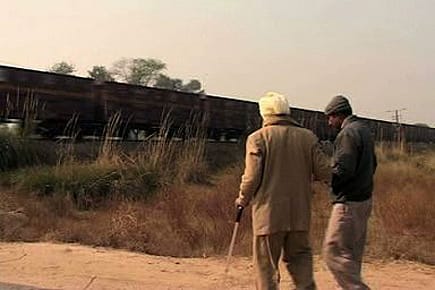
Could it be that 62 years on, the scars of the Partition violence have still not healed because there is so little voluntary admission of guilt, so much glorified victimhood? Here's a narrative finally that trains its gaze at the perpetrators.
Could it be that 62 years on, the scars of the Partition violence have still not healed because there is so little voluntary admission of guilt, so much glorified victimhood? Here's a narrative finally that trains its gaze at the perpetrators.
There is a point in Ajay Bhardwaj's film on Partition, Rabba Hun Kee Kariye (English title: Thus Departed Our Neighbours) where a character speaks of an invisible border between life and death. In east Punjab, as the frenzy of slaughter increased, caravans of Muslims who would not have made it across to Pakistan headed towards the state of Malerkotla. Mobs bent on murder gave chase, and yet the moment this border was crossed they would stop. A myth barred their way. In 1705, the governor of Sirhind ordered that the imprisoned sons of Guru Gobind Singh be bricked alive. Among the assembled nobles, only Sher Mohammed Khan, the Nawab of Malerkotla, walked out of the court in protest. In Malerkotla, 242 years later, not a single person was killed in the violence of Partition.
If peace came to Malerkotla through myth, violence came to the rest of Punjab in much the same way. History relates the proximate factors leading up to the Partition, the role of the British, the Congress and Jinnah. None of this explains the frenzy of the violence. The madness that knew no bounds, except those of myth, was also born out of the myths we have of the others—the rights and wrongs of a remembered past.
Mythology as opposed to history totalises, it tells a story where nothing is left incomplete or unexplained, where every strand is drawn to a close. But the myths that Ajay Bhardwaj seeks to understand are not the myths that led to the violence of Partition but the myths that let us live with that violence. We have no shortage of stories that deal with the victims, none that talk of the perpetrators. Innocence is easier to come to terms with than guilt. How does a village, a town, a community deal with the violence it knows it unleashed? Neighbours, friends and relatives were part of the mobs that acted out the bloody fantasies of much of the community. Human society has always placed a prize on murder; done with the violence, how does a community deal with the knowledge of murderers in its midst?

The Liberation of Bengal
05 Jun 2026 - Vol 04 | Issue 74
A silent revolution ends the reign of fear
This is the story Bhardwaj relates. Murder and violence do not go unpunished. People testify to what befell those who participated in the massacres. Justice may not have been done immediately but in their telling, justice was done eventually. One such man may have fallen prey to unexplained sickness, another may have lost his wealth and status, each of them in one way or the other suffered for their acts in this very life.
It could well be argued that these testimonies are far too comfortable for those who relate them. They distance them from the violence, save them from complicity but they ultimately go to the heart of the matter. For the vast majority of those who lived through Partition, the massacres may be justifiable but individual acts of murder were not, they eventually brought their own retribution.
This is how myth helps us live on—reality is harsh, but at least in myth, justice is seen to be done, and in this knowledge lies the way to living with the past. If today we must worry about Gujarat, and Ajay Bhardwaj does not have to say this, it is because even the myth of justice is absent in the state. A community lives on without a sense of guilt or remorse and this has never happened before, as the film shows, not even during the Partition.
»Hartosh Singh Bal
CREDITS
Camera: Ajay Bhardwaj | Editing: Tenzing Kunchok
TO ORDER
Mail ajayunmukt@yahoo.com