Besieged, Not Fallen
Questions on Pakistan's intent to fight terror and fulfil its international obligations are legitimate, but they assume a State in complete control. It is not
Do you know what happened to terrorists who bombed the Islamabad Marriott Hotel back in 2008, several months before the attacks on Mumbai? The same thing that has happened to the planners, financiers and key actors involved in Mumbai. Nothing much.
How about the killers of Benazir Bhutto, a woman who brought out an entire nation to vote her into power not once, but twice? Do you know what happened to them? Or the murderers of Shahbaz Bhatti? Or, the killers of dozens of Pakhtun leaders from the tribal areas and Swat? Or, going further back, the people who killed General Zia ul Haq? How about the killers of Liaquat Ali Khan, Pakistan's first Prime Minister? Do you know what happened to any of these murderers?
Nothing much.
In December 2009, terrorists attacked Parade Lane mosque in Rawalpindi, on a Friday, during the weekly congregational prayer. In attendance were serving and retired officers and their families. Among the more than three dozen dead were children, a retired general, and a young man who was visiting Pakistan for his wedding.
The Parade Lane attack took place several weeks after the General Headquarters (GHQ) of the Pakistan Army had already been attacked in October 2009, and held hostage, by 10 terrorists for 22 hours. The same GHQ that owns the rights to the world's fastest-growing nuclear arsenal and the world's sixth largest military.

The Liberation of Bengal
05 Jun 2026 - Vol 04 | Issue 74
A silent revolution ends the reign of fear
Not all the terrorists who attacked the military directly got away. But most did. Suicide bombers have struck ISI (Inter Services Intelligence) targets in Lahore, Faisalabad and Peshawar, and the Special Services Group commando headquarters in Tarbela. Pakistani Frontier Constabulary men have been kidnapped and taken prisoner by Tehrik-e-Taliban terrorists in the tribal areas multiple times. Not much has happened to the perpetrators.
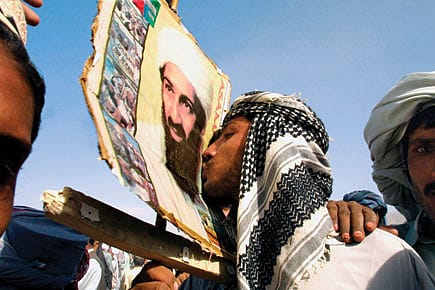
What is the purpose of detailing a litany of terror events in Pakistan? It is to assemble some facts. In the aftermath of Osama bin Laden's killing in Abbottabad on 1 May, facts seem either in short supply, or in such a severe state of fragility that their status as 'facts' becomes hard to believe.
Bin Laden is dead and reasonable people everywhere have overcome the initial euphoria to conclude that while symbolic, his death does not mark any major milestone in the effort to defang the global Islamist terror enterprise. So the most pertinent questions have hardly much to do with bin Laden at all. The big questions are around the country he was found in, and what role this country has played, does play, and will play in fixing itself and fulfilling its international obligations.
For the most part, Pakistan comes out of the bin Laden killing with two new injuries on a body that already has broken bones all over. The first injury is for those who believe that the Pakistani intelligence, police and military community knew nothing of bin Laden's presence in Abbottabad. If you believe that bin Laden got to Abbottabad on his own, and lived there, on his own, without help from any level of the Pakistani state, then you have to also believe that Pakistan's capacity to operate as a normal state is now deeply compromised. Bin Laden was not some faceless, nameless creature. He was the most hunted and one of the most recognisable faces on the planet. If the Pakistani state does not know that the 21st century Hitler was on Pakistani soil, then terrorism is the least of Pakistan's problems. When a state has its basic capacity questioned, this represents a deep and serious injury.
The second injury is for those who believe that bin Laden was in Pakistan not through some crooked game of chance, but due to a deliberate set of decisions by the authorities in Pakistan, who either knew all along that he was in Pakistan, or came to know of his having infiltrated the country through its porous border with Afghanistan, and chose to remain 'silent' about it. If you believe this, then you also have to believe that there is a severe disjoint between decision-makers in Pakistan and decision-makers of all the other countries of the world (bar none, including North Korea, Cuba and Iran). Pakistan would then represent the only country in the world that would knowingly harbour and sustain the world's most wanted terrorist, thereby at least hinting at sharing his agenda to some degree. Now, bin Laden had openly, and with demonstrable proof, declared his hostility to Pakistan and its people, waging a war of a thousand suicide bombs in Pakistan, especially since July 2007, when the Red Mosque siege took place. If Pakistan was harbouring bin Laden, then it was essentially enabling the murder and destruction of its own people, its society and its economy. When a state has its basic will to protect and serve its people questioned, this too represents a deep and serious injury.
Are either of these two propositions plausible? Could it actually be that Pakistan is now so bereft of capacity that it cannot defend itself against a ragtag set of ruffians and thugs who use teenaged boys as human missiles? Or alternatively, could it be that Pakistan is now so far off the moral deep-end that it knowingly and deliberately assists and enables the world's most wanted terrorists, despite making claims to the contrary?
Nothing is impossible. Indeed the cumulative evidence from Pakistan's counter-terrorism record may offer compelling proof of both the Pakistani state's incompetence and possibly its support for terrorism. When shrines, mosques and schools become the target of terrorism, surely there has to be some desperation to our analysis. And yet, it is this desperation that might be a critical factor in all this.
The single-lens view of Pakistan through the prism of terrorism often ignores the substantial body of evidence that suggests that dysfunction in Pakistan is deep, wide and systemic. Pakistan has an education emergency so severe, that it keeps nearly 40 million kids between five and 18 out of school. That is among the world's largest out-of-school populations. Most cities in the country experience more than six hours of electricity load-shedding. Industry is in disrepair. The police don't have bulletproof vests, or in many cases even guns. And the justice system will more readily sentence a Christian woman to death for blasphemy than it will sentence a gang of rapists to death for gang-rape. The fissures and cracks in the Pakistani state's ability to function are deep and wide. This, incredibly, might be the good news.
It may be good news, because at a minimum, it helps us eliminate at least one of the theses about Pakistan. Pockets of support in state and society notwithstanding, the problem here is capacity, not some grand conspiracy by the Pakistani state. The ISI and Pakistani state simply don't have the capacity to cook up the greatest single plan for world domination in human history. Instead, it is almost assuredly the case that the state in Pakistan has not quite in fact lost all its moral marbles. Parts of Pakistan have lost some of their moral marbles, and other parts are not catching up fast enough to cover up the breaches and make up the numbers.
If Pakistan is not a state whose every action is deliberate, and inherently evil, then the problem is decidedly more about capacity, and the ability to get things done. That is not to suggest that there aren't important sections of the state and society that have lost the moral plot completely. There clearly are, as was demonstrated by the Salmaan Taseer assassination. But those renegade elements do not run the asylum. Unfortunately, no one does. The balance of the problem in Pakistan is not a problem of will, which, though weak and poorly articulated, does exist. The balance of the problem is competence. Pakistan doesn't because Pakistan can't.
What proof is there of some will existing? The presence of 140,000 troops on the northwestern border might offer one clue. That too is the Pakistan Army. Those jawans who die, on a daily basis, and in numbers that will perhaps one day shock the Pakistani people, are demonstrable proof that Pakistan is fighting terror. Its failure to be morally clear and administratively effective on Hafiz Saeed and the Lashkar-e-Toiba is a massive Pakistani failure, but it doesn't erase the efforts Pakistan is making on other fronts.
Both the 2005 earthquake and 2010 floods may offer some more proof of positive will. Governments often completely collapse at a time of catastrophe. Yet, Pakistan's local administrative system, bruised and battered as it has been by poorly conceived reforms and innovations, still manages to produce some staggering results. One month after the floods had passed by the Khyber Pakhtunkhwa province, through the Punjab and into Sindh, district coordination officers (or DCs in old ICS terms) were slavishly spending up to 20 hours working in the field in multiple districts. This kind of administrative resilience may offer the building blocks for bigger and better things in the future.
Of course, it is easy to forget that Pakistan tested a nuclear weapon over 13 years ago, or that it is working on a whole range of missile delivery systems with both short- and medium-range capacity. Pakistan tends to be reasonably good at the business of developing weapons capacity.
Developing nuclear-capable missiles while your country's children starve for an education, for jobs and in some cases, for basic food security, is no matter of national pride. It is a matter of national shame. But this national shame is spoken of and is manifest on a nightly basis, across a Pakistani media that could stand up with the best in the world in terms of its willingness to challenge the corruption, moral ambiguity and destructiveness of the country's ruling elite. No Muslim country on the planet can match the kinds of liberty enjoyed by the Pakistani press.
What is the purpose of detailing these bright spots in an otherwise dark and dreary present? Certainly not as grounds for complacency. Instead, it is to suggest that even within a culture of utter state incompetence, there is a mixed and diverse set of dynamics in Pakistan's state and society.
The struggle, therefore, in Pakistan is on two fronts. The first is a war between competence and incompetence. This is a conflict that can only have one outcome, which is that competence will win out. But this is far from an assured victory. It simply cannot be achieved without strong and sustained international pressure. India can play a vital role here, in part by continuing to relentlessly seek answers on the Mumbai probe, and in part by expanding the relationship and pursuing greater interaction between Indians and Pakistanis.
The other conflict is much more complex. Clearly, there is an infinitesimally small, yet influential, immoral element within both the state and society that seeks war and destruction—that's what allowed a man like bin Laden to be present in Pakistan. Luckily, there is a massive majority that, while too easily inflamed, essentially wants to live with dignity and in peace. Beyond that, however, there is a problem. Pakistan possesses almost no morally exceptional leadership. This is a killer weakness for a society and state in crisis. Moral leadership can help extricate a nation from crisis by making unpopular decisions popular. By making difficult decisions easy. By doing outrageously brave and courageous things in a heartbeat.
For all the positive strains that exist in Pakistan, this one element simply does not. Without it, Pakistan will continue to meander along on a meaningless series of misadventures and debacles. The inner resilience and islands of excellence may stem the rot and will prevent a total breakdown, and that perhaps, is why we should not give up on Pakistan. Yet. But these scattered strengths will not be able to turn the tide. To turn the tide, Pakistan needs moral leadership.