Doctors vs The People
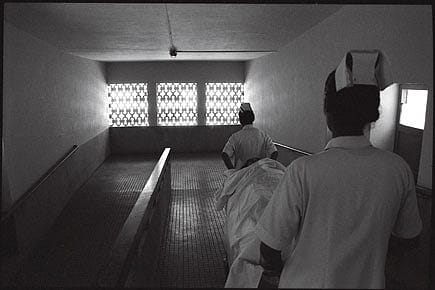
In the dock are these revered men in white coats. They just do not care enough anymore, allege patients. Not true, say medical practitioners in their own defence
Dr Paresh Desai plops his BlackBerry in front of you. "Look at my phone," he says, "See the calls. 11 pm, 11.30 pm, 1.30 am, 2.30 am and 4 am."
Dr Desai, a senior paediatrician in South Mumbai, is not convinced that doctors are reluctant to answer questions from patients. That's why he shows his phone. He took all of those calls.
"Yes, I took them," he says, "It's about a child's health, after all." And he reiterates his spirited defence of his colleagues.
"As long as it is relevant," he says, "how can any doctor not answer a patient's question? Maybe it happened in an earlier era. Doctors liked to play God. That's not possible now because there is information available to patients. If there's a patient of dengue or malaria, his relatives have researched it already."
Dr Desai is the kind of doctor who would attract the adjective 'avuncular.' Evidence of his personable nature is on display in his cabin. On a softboard, there is a greeting card from students and teachers. On his desk, there is a mug that says 'world's greatest husband'. The bed on which he examines his patients has five toys, including an M&M bean.

The Liberation of Bengal
05 Jun 2026 - Vol 04 | Issue 74
A silent revolution ends the reign of fear
Unfortunately, not all doctors evoke the same warm feelings among customers. Increasingly, they are seen as callous or mercenary. Speak to anyone fresh from a hospital experience. You will hear gripes about duty doctors making hurried, often cursory, rounds—spending no more than five minutes with a patient, who is charged for the visit nevertheless. And if you want information or updates, it is you who typically has to take the initiative. Else the doctor may leave with a perfunctory,
"He's alright."
Dr Sujeet Jha, consultant endocrinologist and head of the department of endocrinology, diabetes and obesity, at Max Super Speciality Hospital, Saket, New Delhi, seems aware of the reputation of doctors. "The common complaint across the world is that doctors are not communicating properly, whether it is about health risks or side effects of medicines. I recently met a lady from Kathmandu who had just been operated upon by an ex-surgeon. She opted for him instead of other practising doctors because she felt that he had answered all her questions properly."
At the same hospital, Dr Viveka Kumar, senior consultant, interventional cardiology and electrophysiology, explains why doctors behave the way they do. "In India, medical practice has always been one of implied consent," she says, "Doctors feel that if you have come to a hospital, it is implied that you trust them and their methods. Until recently, doctors were not used to being asked about what they were doing. Now there is so much awareness; you get to read about the patient's perspective in the media everyday. This has led to attendants and relatives becoming more vocal about their opinions."
But, Dr Kumar adds, "At times, some of these questions by relatives are not asked with good intentions. Generally, such queries are instigated by outsiders. In addition, doctors fear that whatever they say will be quoted against them in consumer courts. However, I make it a point to tell the patient and his relatives about the problems and risks involved. It is the right of the patient and his family."
One Mumbai man spent a good part of the past year dealing with his father's complicated, ultimately fatal, health problems. He got a fair idea about the working of six doctors and two hospitals. Most of those experiences were unwholesome. "There are two things I cannot get over," he says. "There is a psychiatrist whom my father had developed a comfort level with before his death. When my father's health started deteriorating, we requested the psychiatrist to visit him in hospital and meet my sisters, who had come from the US. He did not come. He made excuses. He lived just two suburbs away. I think he was wary of meeting my sisters, who have a background in science and had questions about the drugs he recommended."
"That brings me to the second thing. It involves the same doctor and another senior psychiatrist. They prescribed strong anti-psychotic medication for my father without a warning about side effects. Later, we found out that these drugs have dangerous side effects. Possibly, the doctors wanted relief for the family and hence recommended those drugs. But it was irresponsible of them not to educate us about side effects."
He adds, "In one of the hospitals, three doctors were observing my father. They themselves couldn't come to an agreement on the course of action. One would say, 'He's alright.' He was impatient with questions, answering in stock phrases. Another doctor said, 'He's in bad shape, take him home.' Perhaps he was frank, but the curtness was shocking. The third one had no role to play after a point, because my father's case had ceased to be psychological and was now neurologic. The only senior doctor who came in and sat with us a couple of times was the neurosurgeon. He was decent about the whole thing. But it is possible that we got those one-on-one meetings only because we found a common friend."
A well-to-do Bangalore man, whose mother was suffering from stage-three cancer last year, took no chances. "A close relative works in the pharmaceutical industry. We pulled some strings through him at the top rungs of the hospital. That ensured that we at least got marginally better treatment."
About such cases, Dr Kumar says, "The amount of time spent by a senior doctor doesn't generally have a directly proportionate relationship with the outcome. As a senior doctor, you get hour-by-hour feedback from the duty doctor. However, in India, we have made it a habit to not trust the duty doctor. One should realise that it is through his eyes that a senior gets to know the exact details of a patient's condition. In the West, it is called delegated responsibility. But here, people want intervention only by the senior doctor. Practices are now evolving, but work is still more individual-centric than team centric."
Asked if the behaviour of doctors towards patients could improve, Dr Kumar replies, "You need to be more humble and respect the patient's time, money and patience. However, sometimes patients feel that by paying an X amount of money, they have bought 24 hours of the doctor's day. In fact, this is the only country where doctors can be reached directly on their mobile phones."
A more serious worry for patients is a misdiagnosis or an operative mistake by a doctor. These are not common, at least in the better hospitals. But such horrors happen. A woman came close to losing her life after a muddled surgery at a well-known Mumbai hospital. She is afraid to talk about the case. "I'm still under their care. I don't want repercussions. The medical lobby is strong." All she says is, "Doctors should not recommend laparoscopy when a patient's body type is not suitable for it. But sometimes they do, because it is more expensive than ordinary surgery. It is dangerous."
Doctors offended by questions of professional integrity in the realm of medicine should note that the issue has been highlighted by cinema and books for years. This suggests that these suspicions are justified, not mere cynicism. Veteran Marathi actor Vikram Gokhale's recent directorial debut, Aaghaat, is about the same subject. The film shows a junior resident doctor taking on a powerful senior over his orders to take out both ovaries of a female patient. She believes one of the ovaries could stay. The senior surgeon uses his clout to try getting the junior sacked. But she wins. The film is based on Dr Nitin Lavangare's Nishkarsh, the Marathi translation of an English book.
"The medical profession is a caring one, but scratch away at its façade and one sees a horrifying amount of fraudulence in the system," Gokhale told a newspaper recently, "My movie shows someone from the inside speaking up about corruption [in medicine], but in general, the dishonesty of this profession goes on untroubled."
A senior executive at a top pharmaceutical firm believes that the practice of money-motivated medicine is a genuine problem, not just perception: "In the last ten years, a sizeable number of doctors have compromised [their profession]. There are hundreds of pharma companies in India; of these, a few are good. But competition is intense, especially for common drugs." This results in companies plying doctors with 'incentives' to prescribe their drugs. All this is worsened by the doctor-patient relationship having taken a turn for the transactional, weakening the personal sense of responsibility one bears the other.
However, the executive says, this is not something that patients need worry too much about. "The doctor-pharma company equation does not come in the way of a patient's treatment, as long as the patient is being given a quality drug."
Besides, Dr Desai says, "What incentives are we talking about? This clock?" He points to a paperweight. "This moronic pen?" Fishes out a pen. "And don't journalists walk out with gift bags after press conferences?" But these inducements, he avers, rarely cross the limits of acceptability. "Maybe a dinner or a sponsored trip to a conference. I don't see any good doctor risking his reputation for these."
According to the pharma industry veteran, "A bigger problem is nursing home rackets. These are always in a hurry to get patients admitted. You will be kept for periods longer than necessary and asked to spend on this or that." Asked if doctors are set targets by the hospital management, he says, "I have heard of that."
The year 1985 is important from the point of view of Indian patients. It was when they got a forum through which they could fight for medical justice. This forum was called ACASH (Association for Consumers Action on Safety & Health). It was set up not by consumers, but mostly by doctors. Consumers could also go to ACASH if they wanted to invoke the Consumer Protection Act (CPA).
Dr Arun Bal, president of ACASH and a diabetic foot surgeon, says, "It was set up by founder members who were already involved in consumer activities. Back in 1985, there was no specialised consumer organisation working in healthcare."
ACASH's avowed objective is not to extract money from doctors by way of compensation, but help improve healthcare in India. It acknowledges that medical practice is riddled with problems. It is inaccurate, it also believes, to label doctors 'commercial' or 'callous'. Some of the problems, in its view, stem from rivalry between doctors and the public sector's declining role in Indian healthcare. "Our analysis shows that both doctors' and society's perception of each other is not based on facts," Dr Bal says. "The perception of doctors that the CPA is being used to extract money from them is incorrect. Of all the consumer court cases in India, medical cases are about 3.5 per cent. Of these, only 25–28 per cent cases are decided in favour of consumers. Also, the perception of society that the medical practice and profession is full of negligence is not correct; as the analysis of complaints received by ACASH shows, adjudicable negligence is only 3–5 per cent."
Adds Dr Bal, "Our experience and analysis of cases handled by ACASH reveals that—one, many complaints are instigated by doctors or other healthcare professionals for professional rivalry; two, the majority of complaints arise due to infrastructural problems; three, in most complaints, there is some failure of communication—a skill that is not part of the medical curriculum; and four, ethical standards are in decline."
The importance of effective communication exercised a Delhi-based senior dermatologist so much that he made a simple change that he recommends to all doctors.
"I have changed the manner in which I write prescriptions," he says, "There is no point writing terms in Latin, which patients will not understand. I ask them to write instructions in their own handwriting, and in a way they will be able to understand later." Patients and their families have so many questions, he adds, largely because doctors rarely discuss ailments openly.
That could change, believes Dr Bal, if healthcare is taken more seriously by the State. Right now, with the private sector's role so strong, there is little pressure on the Government to enhance services.
Doctors react with vehemence when told about the patchy public perception of their profession. They say that the discipline is like any other, with its share of bad apples. They are particularly touchy about being branded mercenary. "The same doctor who was God on day one becomes the Devil at the time of bill settlement," complains Dr Vijay Surase, a Mumbai-based consultant interventional cardiologist.
Dr Sujeet Jha says, "You know, it is okay if patients drive SUVs. But if a doctor drives one, people think, 'He must be cheating.' I stay in Gurgaon, and a lot of my friends work in real estate and retail. They think I make a lot of money. But I don't make half of what they earn. Moreover, it is unfair that a mall owner or journalist can earn a good salary without questions raised about his or her practice, but not a doctor. I think this perception that doctors have become more money-oriented stems from the fact that healthcare costs have gone up. But doctors get very little of that money."
Dr Ajaya Kashyap, senior consultant and chief of cosmetic, plastic and breast surgery at Fortis La Femme, New Delhi, says, "Medicine is a business, there is no doubt about that. It is not social work… I would also like to add that contrary to popular perception, doctors don't earn a lot of money. In India, orthopaedic surgeons get about Rs 20,000 or so for hip replacements; it is the prosthetics that cost much more. So one needs to maintain a balanced view."
Doctors insist that their need for earnings does not override ethics. Besides, think of the masochistic amounts of time and often money they expend on becoming doctors to begin with. A Mumbai girl doing her MBBS in a private college says, "I'm paying Rs 3.25 lakh a year for a four-and-a-half year course. That's around Rs 15 lakh only for an MBBS, which alone no longer has much value—you'll be working at a hospital at Rs 10,000 a month. I have to do a post-graduate degree. That is three more years of studies at Rs 4.5 lakh a year. Do the maths."
It does not end there. "I will be around 30 when I am through with the studies," she says, "But who goes to a 30-year-old cardio specialist? Only when I'm 40 or 45 will I have the requisite reputation."
The student adds, "When I was thinking of taking up medicine, I spoke to a few doctors for advice. One of them had a beautiful house on Napean Sea Road [in plush South Mumbai]. He said to me, 'Don't go by this. This is only because my family is affluent.'"
Says Dr Desai, "My 22-year-old son initially planned to become a doctor. Recently, he changed his mind. He said he'd do law instead. Part of me was sad, part of me was happy. The number of applicants to the Common Entrance Test for medicine is now one-third of what it used to be. I fear a scarcity of good doctors for future generations of Indians."
As far as being curt with patients goes, doctors defend themselves by saying there are just too many patients, some of them annoying. "I will give you one example, no names," says Dr Paresh Desai, "Big time lawyer. Child is 10-years-old. Second day of high fever, I say to the mother, 'We will do a few tests. Maybe it's typhoid.' The mother says, 'Doctor, last year he got malaria and dengue. Can it be malaria again?' I tell her it isn't, because we had tested for it three times: 'Let's not jump into anti-malarial treatment because it has its own problems.' Her sister is a doctor in Los Angeles; three phone calls, four phone calls, and she says, 'I think we should start anti-malarial treatment' from 10,000 miles away. So I responded firmly, maybe even curtly. She got offended. I said, 'See, I have an advantage over you. You may be the child's aunt, but I have seen the child, you have not.' It turned out to be typhoid."
Dr Desai continues, "I would not have minded it had they taken a second opinion. They have that prerogative. But don't tell me what to do from there. When you make dal in your house, I don't tell you how much salt to add."
So, is there hope for improved healthcare in India? And, in aid of that cause, what do doctors want of patients?
Answering the first question, Dr Arun Bal says, "There is unlikely to be dramatic improvement. However, as the market economy becomes predominant, market forces will push quality. This may make improvement mandatory. Also, public sector investment in health will increase, as higher economic growth without proper healthcare is not likely to work."
What doctors want of patients is for them to stop being alarmed by the bills. They need to acknowledge that good healthcare costs money. "People are willing to buy an expensive phone, but cry foul if they have to invest in health," observes Dr Sujeet Jha. "They say, 'Chaar maheene pehle toh tests karvaaye thhe (I had got the tests done four months ago)…'"
Doctors also want patients to respect the fact that they have a family life too. Dr Jha says, "A lot of relatives come to me and say that their uncle in the US is a doctor and that I should discuss the diagnosis with him. Guess what, 90 per cent of the time, he will not pick up the phone… Expectations here are simply enormous. A patient's family member once told me, 'I will call you later when you are relaxing at home.' I couldn't help but ask him, if I spend that time talking to him, who will teach my son maths? 'Why don't you hire a tutor?' came the reply. We also deserve a little time with our family."