India’s Superpower Delusions

Some dreams can be dangerous. Especially ones that are not drawn from any sort of reality. Like India’s fixation with being a grand player on the world stage.
conceit
It’s an India ready to make the world spin the other way round on its axis. Each success has brought another bout of delirium, India’s lunar mission being a fine example. (Photo: KAMAL KISHORE/REUTERS)
It’s an India ready to make the world spin the other way round on its axis. Each success has brought another bout of delirium, India’s lunar mission being a fine example. (Illustration: SHYAMAL BANERJEE)
NRIs have played a big role in formulating the superpower fantasy. They’re oblivious to starvation deaths in Madhya Pradesh but delighted to find Laxmi Mittal the UK’s richest man. (Illustration: SHYAMAL BANERJEE)

For a man to be superman, he must first overcome himself —Nietzsche

There is a thin line between the audacity of hope and grasp of reality. India’s middle-class, with its fond dream of India as a Superpower, is like a trapeze artist walking that very thin line. Despair too much, and your case is hopeless. Daydream too much, and you topple into a delusionary void.

Over the past decade or so, it’s the latter which has been the bigger danger. India the Infotech Iron-pumper. India the Nuclear Non-aggressor. India the Space Scorcher. India the Cricket Conqueror. India the Massive Market. India the Enormous Economy. India the Growth Giant… you get the drift. With a flying cape and coloured briefs, it’s an India ready to make the world spin the other way round on its axis. At the top level, the dream was articulated by an optimist-in-residence at the Rashtrapati Bhavan itself, former President APJ Abdul Kalam. With his technocratic training straight from the rah-rah realm of rocket science, he went forth and set a deadline: 2020. And then got little children all across the land waving little tricolours to pledge their support.

The Millennium Goal to beat all millennium goals! The future that was promised! The glory that was destined! Each success has brought another bout of delirium, India’s lunar mission being a fine example. There’s ice on the moon, Jai Hind!

So many have grown so fixated on the target, that should we miss our date with Superpowerhood, we might need group psychotherapy for decades to come. But delusions of grandeur, some think, are best cured by grander delusions of grandeur. So, with some digital jugglery—Infotech Imperialism has its privileges—the deadline has been reset to 2012. As if the poor hungry child in drought-ridden Bundelkhand just has to wait for the clock to tick past the midnight of 31 December 2011, and he’ll be reborn in the land of milk and honey.

THE WILL TO POWER

That a sizzling economy can fuel hysteria has been a new learning. In a way, this is understandable. For a generation of Indians who remember the humiliation of PL-480 food aid from America, a five-year wait list for a scooter, a phone as a symbol of authority, and a working phone as a sign of cosmic rarity, the emergence into this bright new world of choice and plentitude is cause enough for exhilaration. And with $280 billion in the treasure chest and a nuclear bomb in the basement, nobody dare take it away.

The ‘Hindu rate of growth’ of 3 per cent has been replaced by a robust 8 per cent. There is ‘feel good’ in the air, and it is making us heady. “There is a feeling that the next generation will be better than the previous one,” says Pratap Bhanu Mehta, president of Centre for Policy Research, a think-tank, “In itself, the fantasy is not a bad thing, but to believe that you have arrived can be dangerous. India has a very vast underclass and this just cannot be wished away.”

One aspect of the fantasy is the belief that India has finally secured a seat at the high table of global power. After all, the G-8 has become the G-20, coordinating stimulus packages to save the world. As for wielding a veto over world affairs, don’t forget India has achieved parity with the Big Five, having found a cosy place in the Nuclear Club at long last, even if the official membership card is still in the mail.

With heft such as this, it is puzzling to have Bangladesh defy India in letting terror camps run amok. Or ragtag pirates thumbing their nose at Indian flag carriers on the high seas. Or even Indians opting for foreign citizenship at the slightest chance. As any international traveller will tell you, all passports are not created with equal prestige. Perhaps it is no surprise that non-resident Indians have played a big role in formulating the fantasy. Oblivious to starvation deaths in Madhya Pradesh but delighted to find Laxmi Mittal as Britain’s richest man, unaware of the scarcity of potable water in Uttar Pradesh but at their loudest holding wine glasses the size of watermelons, they have become India’s cheerleaders. India’s moment, they exult, has come. If only.

“Nation building is a hard grind,” says Lord Bhikhu Parekh, political scientist, “Rhetoric, on the other hand, is easy. The Superpower Fantasy thus is an escape from reality. In the Nehruvian era, elections were won on the premise that ‘we cannot offer you a great today but hard work will assure that your tomorrow is better’. This has been replaced by the rhetoric of ‘India Shining’.”

This is not the first time that India’s elite has been in a euphoric mood. In 1947, Nehru’s ‘Tryst with Destiny’ had everyone agog. It was supposed to turn this ancient civilisation into a beacon of enlightenment for the world. The 1962 humiliation by China was a cold shower, and a bitterly sobering one at that. In 1971, it resurfaced. India famously won its first war in a thousand years and split Pakistan. Internally, Indira Gandhi’s ‘Garibi Hatao’ was the great new adrenalin shot. It ended in a nightmare called the Emergency. Today’s delusion has its origin in the BJP’s atomic muscle flexing at Pokhran. From ‘desert vibrating’, the country was taken in five years to ‘India Shining’—a slogan that lost an election but gave the middle-class an ego kick. Resplendence, it would seem, is like transcendence. Fold your legs, chant the mantra, and you’re there.

GET REAL ON THE VISION THING

So, can India realistically hope to be a superpower by 2020 or even 2050? This is not a prefix one can buy with $280 billion in hard currency or wrest with a bomb. If power is the ability to exert one’s will, a superpower is understood as having the ability to exert itself globally, or at least beyond one’s territorial borders. In world history, expansive empires have done this, from the Persian, Greek, Roman and Mongol expanses to the latter-day Chinese, Russian and British empires. From the mid-20th century onwards, America has been the Big Superpower.

Only, the information revolution of the modern era has been making it harder and harder to exert power without the consent of those affected, most pertinently that of people within one’s own borders. In other words, there is no question of achieving or sustaining real power—super or not—if the basic aspirations of your own citizens go unfulfilled.

After decades of adhering to Mao’s four-word ‘keep a low profile’ dictum, China has just begun to assert itself globally. America is America, of course, still in charge. So, where does that leave India?

For one, with an urgent need to align vision with realism. To be sure, given the grim scenario in South Asia, India has the makings of a regional power. Missiles and money count, but one neighbour neutralises the warheads and the other has more moolah. This limits India’s influence in its immediate littoral, the big reason why the ‘super’ prefix eludes the country. Can India overcome Pakistan, at the very least, as a critical constraint?

In 2009, India was the world’s second largest arms importer. But it’s still an importer. Frontline tanks, fighter jets and warships, they’re all foreign made. This means dependency. China, in contrast, is now among the world’s five top arms exporters. India’s own defence development efforts since 1947, barring the odd missile, so far have been a scandalous waste. This tardiness retards the country’s power projection capability in hard military terms.

Then, there is the question of economic emergence. At last count, this country of 1.14 billon people had the world’s largest number of malnourished children. India also has more people who can’t write their name, more malaria deaths and more jobless youth than any other country. To most statisticians at human development organisations, the very aspiration of superpowerdom is a crude joke.

Gung-ho Indians, meanwhile, are counting on the ‘demographic dividend’. By this conventional wisdom, India will still be youthfully energetic while the developed world ages into its drone years. This view ignores the fact that a majority of India’s young are illiterate and underfed, and unfit to do anything except the most ill-paid of jobs. The dividend could well turn out to be a disaster.

The third superpower paradigm involves the State and its institutions. While Indian democracy is often hailed highly for its ‘soft power’ appeal worldwide, it masks a bad case of dysfunctional politics, a reality that strikes the elite only in occasional spasms. Instead of delivery of results, electoral politics is all about retention of power and dispensing of patronage. Unlike the revitalised US democracy, India’s capacity for self-renewal seems much too weak for the country’s good.

Worse, the resolve to attain the grand goal India has set for itself is in sparse evidence. Internally, the Superpower Project is hollow. Take a look around. The fissures of petty politics block attempts to win elections on national issues. Nor can these become priorities of governance. Superpowers, on the other hand, have always upheld issues that are vital to them in a broad sense.

So why does this fancy persist? Says Shiv Vishwanathan, a sociologist, “There is a fantastic urge within the middle-class for upward mobility. For status. This is fuelled equally by the expatriate Indian cousins when they visit or hold ‘India’ days. It is a dangerous fantasy because it is taken as manifest destiny. Bear in mind that a lot can still go wrong in the India story. If the middle-class insulates itself in the superpower ivory tower, it will invite reactions.”

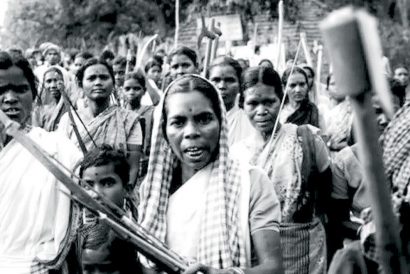
There are sniggers in the dark, scowls in the aisles. Read The White Tiger. Or watch Slumdog Millionaire. Though aimed at Western audiences, they are reminders of the mockery that comes the way of India’s middle-class consensus on Superpowerhood. And indeed, there is much that should make the country squirm. There is nothing ‘super’ in having to declare a quarter of the country’s districts tormented by Naxal violence. There are people out in the jungles who are taking up guns to overthrow the State, an entity they see as increasingly hostage to the mollycoddled middle-class and its fancies.

MATTER OF SELF BELIEF

So, can no good come of hallucination? It could depend on how the energies are channelled. In Meiji Japan, or Imperial Britain, the State took national ambition to new heights. “Some good does come out of the fantasy,” says Gurcharan Das, “It gives a sense of self-belief. But it is critical to direct this positive energy, for otherwise it can lead to a dangerous disconnect of the elite from the concerns of a transforming country.” India must wake up.

OLDER COMMENTS FIRST

9 COMMENTS

Permalink

The write-up is based on the premise that the autor states as "India’s middle-class, with its fond dream of India as a Superpower, is like a trapeze artist walking that very thin line."

Where is this middle class dream that author seems to assume? Did he do a proper survey? Or is this parroting random idiot anchors on TV? If the premise of a write-up is what Barkha Dutt randomly spouts, one needs to find the editors who let this pass their muster. And ask for a refund.

22 January 2010 | True Man

Permalink

In the era of BRIC nations, BRAT nations and the increasingly SUPER POWER LESS nations nurturing a quiet or explicit wish to be a super power or hold such position is a wasted exercise. Amigo, estes Mucho Travaho poko dinero ! Friend its too much work (responsibility) for too little money (reward).

Become a super power why? I say no need. Being just super good would do the trick although it carries an impossible pre-requisite. A cultural evolution of the "INDDIAAN" into a dependable Indian at warp speeds.

THE GOOD NEWS:
The hand throwing the dice is still western but the board they fall on is very Asian. You see the western Corporations and their share holders have wet dreams lusting about you, 24/7. Increasingly their bottom lines are being supported by new growth in Asia, infact some only surviving from new sales there. Like it or not you have the kind of power the Super Powers never had. Because they know you can take the game board away at wish or stop the juice when you want. China does that every month and they still come back begging, oh please let me play.

2.5 billion upcoming consumers just in India & China..My friend that is power real power without the ammo.

To set the record straight ...Of all the middle classes I have seen - no citizenry is as venomously cynical & critical about their government & the plight of 'All' things around them. Passionately self centered living has been mastered by us. Majority doesn't care about the Desh or the Desis in it...its Me first mentality 24/7.

Where do find a 200 million plus middle class dreaming of the dream you talk about? They are only dreaming the global standard middle class dreams. Bigger house, better education for kids, better cars & better and more of everything.

I don't believe the Republic day paraders think they are marching for a super power them selves. I doubt if his monthly paycheck affords him any illusions that he is serving a Super Power. Sadly it's no different in the west. Compensation for the uniformed americans is sorely lacking too to say the least.

Well enjoy your super hot samosas and superb spice tea. I got2go I have got some super middle class errands to run..

24 January 2010 | Suniel

Permalink

As Gurcharan Das says, fantasies are important, and they end up influencing the reality of a nation's actions. I would say that while Indians tend to go a bit hyper on the superpower notion, its probably a swing to the other extreme from the "India sucks", and "we will always be thieves" of our parents' generation. And I find that this kind of talk is limited to late night, post patriotic movie and after a patiala peg. The harsh morning light drives away these fantasies.

For true delusion one must only look over the fence to China. The delusion of China's superpower-hood is sustained not only by the urban newly rich and students, but is more or less a mass hallucination in which the entire world participates. The only people who seem to be nervous about this superpower delusion are the Chinese communist party bosses. Remember the last superpower, the USSR? There were riots for bread the day after the hallucination broke.

In the end all big countries have such massive inequalities, that it is always going to be ridiculous to talk of superpowers. All the American borrowed billions can't get rid of the poor who cart their entire lives around on old shopping carts. The posh new airport in Beijing gets its electricity from dirty brown Shaanxi coal, mined by peasants who barter away years of their lives, so they can eat pork once a year. And the Indian nukes were probably carted to the testing ground by malnourished coolies with swollen ankles.

The superpower game is like a porn movie, the soldier on the screen has a hard on, the middle class watches with excitement and the lower classes get screwed. The upper classes? They made the movie dude.

25 January 2010 | bavi

Permalink

There is indeed much to be done to acquire the super power status. All one can say is that we are lingering in the graveyard full of hopes of life.
The very fact that we are one of the biggest importers of arms and that we have a huge military manpower that is waiting to be hired by existing as well aspiring super powers in the West bears testimony to the fact that we have miles to go. And as far joining the nuclear club is concerned it is only a pipedream. in fact the nuclear agreement has put all restrictions on us go ahead further with our nuclear program.
The popularity of Pitta bread and Pasta among the upmarket middle class in India (the cheapest food available in TESCO and other stores in the West) narrates the story of import of dreams from the West. Unless we are able to take pride in our "OWN" and define develop and design, it would be foolhardy even to imagine to be a superpower.

28 January 2010 | atul bhardwaj

Permalink

Very well written and pertinent to the 'upbeat' times we dwell in. India doth shine for sure, though the tan is enjoyed by a (very) select few. Well timed, sir.

28 January 2010 | Rahul G

Permalink

This is one more stupid article i read .These kind of indans are very dangerous.This author is only ment for talking big .He said china is coming as a superpower and he never mentioned the problem happening in china . IN 2007 THERE ARE MORE THAN 2 LAKHS MASS INCIDENTS IN CHINA.AND IN 2008 IT INCREASED TO 2.5 LAKHS .China every people is angry about the communist party rule and there are lots of problem in TIBET,XIANGIANG and china has the higest unemployment rate in the world which is about 20 million and in 2020 INDAIN ECONOMY WILL SURPASS CHINA BCOZ OF CHINA'S EXPORT RELATED MODEL AND WEAK CURERENCY .AND THERE ARE 400 MILLION POOR PEOPLE IN CHINA AS PER THE WROLD BANK LATEST REPORT AND CHINA'S PPP IS SAME AS THAT OF THE EGYPT OR 8 TIMES LESSER THAN U.S.So to conclude china faces more problem then india and the author talked only about india .With the above mentioned facts CAN ANYONE SAY CHINA WILL BECOME THE NEXT SUPERPOWER ?

28 January 2010 | noksss

Permalink

Fabulous. Open rox. Nuff said

29 January 2010 | Rakesh Arora

Permalink

For sure, this writer needs a history lesson.

Let's first start with
"India won its first war in thousand years? "

Ninad you dint pay attention in history classes in school. Indians were winning wars 900 years back in present day Malay straits. The Chola navy had even the Chinese at bay who also had an equally powerful navy and was considered the world's pre-eminent navy of that time. The Vijayanagar empire was known to win almost every battle it fought, its only major defeat the battle of Talikota, unfortunately is all people can remember. Indians defeated the foreigner Mughal (corruption of Mongol) empire in 1707 and first re-captured Delhi first in 1720 and then again in 1770s. Mughal kings had to pay tribute to Marathas. Indians under the Sikhs marched into Afghanistan and reached Kabul and occupied it for some time. There is also this other rubbish that Afghans were never conquered by anyone. Yes they were, by Indians! Sikhs defeated Chinese in Nepal/Tibet but both the Sikhs and Chinese had to withdraw to concentrate on their wars back in mainland. The Keralese handed the Dutch a naval defeat and Tipu gavea the British a glimpse of modernity when he fired rockets at that them and handed them a defeat. The British went on to learn from the Mysore kingdom.

I can give you many many more examples. But in your hurry for Arundhati Roy style self-flagellation you seem to be twisting history and corrupting it. The only saving grace is that you did not use the "ruled by foreigners for thousand years" nonsense! And please don't make Indians sound like martially retarded people. Many best generals of their time ranging from the Abyssinians, Uzbeks, Dutch, Mongol, British etc have had to eat humble soup in India after being handed defeats to them by Indian generals!

3 April 2010 | india_forever

Permalink

What you said is exactly true that the Indians fancy too much. The reason is that this is such a country filled with the greatest hidden talents in the world. Every person in India I believe have the ability to be better than the greatest men of the world recognised to be extraordinary. It is just that such talents are not being properly utilized and encoraged properly. We get great ideas when we read certain things but throw away the idea saying that no one will approve it. This problem starts at home. The parents are the ones that make the extraordinary people become ordinary ones. Parents have certain dreams and they want their children to become what they want irrespective of whether he is interested in it or not. I believe there are very few in India that do not have their parents influence behind it. Such people either suffer great defeats in life or they keep fancying that they too could have been number1 when they see others doing better than them. So they start seeing false dreams which seems impossible but could have become possible if utilized at the right time. The ones that were allowed to follow their goals without any persons influence have proven themselves to the world like Gandhiji, Sachin, Mital and many others.

Some may think that you yourself have chosen your goal but you couldn't become number1. It is only because you were influenced by your parents or others some way or the other. That is why a doctors children mostly becomes a doctor, a politicians son a politician, A farmers children farmers. Sweepers children begin sweeping when they are below 10 years are some examples. There are very few cases like a cheap labourers son becoming a IIT'n or a doctors son becoming a singer. We Indians have a inferiority complex combined with laziness. We dream big, aim small, work for even smaller and become just a bit better than our parents. Where we should have dreamt impossible, aimed for some thing that we think is impossible within our ability, and work for it, improving ourself every time and becoming something that our parents could never dream of. That is why I think India is still developing even after 60 years of independence.

If India has to become a Super power we need to first believe in ourself that there is no word called impossible. We need to come out from the chain-held life system and start becoming the number1 person in the world. We will be needing major reformations in both our families as well as in our governments. We must make a democratic group that is led by only the most learned, intelligent people of India. A group that will know how to rule the people, breaking all the bondages that are prevalent. Since we accept everything as it is and are not ready to come forward and prove ourself, we end up remaining a developing nation always copying the western world. Instead we should have brought the technology from western people understand and research on how they have done it and start making them ourself then improve it and start exporting to the other nations like how China is doing. If at first we fail try it in a different perspective and soon you will be amazed to find that it was such an easy task. The way we built our long range missile after the west didnt sell it.
If all the talents were put in the right direction like the americans you would be amazed at how fast India would develop. According to me we would easily touch 25-35% growth in GDP and also become superpower by 2020. We people dismiss the ideas that we do not believe where we should have tried to find out whether, could it be made possible? And if impossible try to find a way to make it possible. That is how the martial arts of China, the aircrafts, spaceships telephones, and many things that we thought impossible came into existance in the West. We must be proud of our ancestors learn from their mistakes and become a person that we dreamt to become. If you dream to become a singer, dancer, cricketer, gamer, IIT'n, researcher, artist or any thing else aim for the thing you like the most and take the training from some person renouned for it and become better than him and try to become unbeatable. This is possible only with research in whatever you do. Try to find your own excellence and style rather than copying the ideas of other people as it is.

India has great potential but do not have a proper leaders to take the people in the right directions. The average Indian age is around 22 while we have the oldest group of ministers. Instead of saying it is impossible and we will not become superpower in this century you come out and start to make the change. If the older people do not understand us take the help of some other person to convince them.
Indians are multi cultural, multi religious, multi lingual, multi ethnic, unlike any country. But in the case of India there are around 1652 languages and dialects that are spoken in India. There is no official religion or state religion and almost all the religions around the world are found in India. Making us just incredible. Aim for nothing less than the best. Dont try to be influenced by others instead become the influence of others. Every goal is achievable if you know how to direct it. Learn from others and invest in defense within the country instead of wasting billions importing it. I could go on and on but I cant due to lack of space. This is an 18 year old boy signing off.

Regards,
-Hitman (gaming/pen name)

14 September 2010 | Hitman Clones

Post new comment

The content of this field is kept private and will not be shown publicly.

CAPTCHA
NOTE: Please enter letters [case sensitive] in the box provided before you submit your comment. This is to prevent automated spam submissions
Image CAPTCHA
Enter the characters shown in the image.