The Ghosts of Gulberg
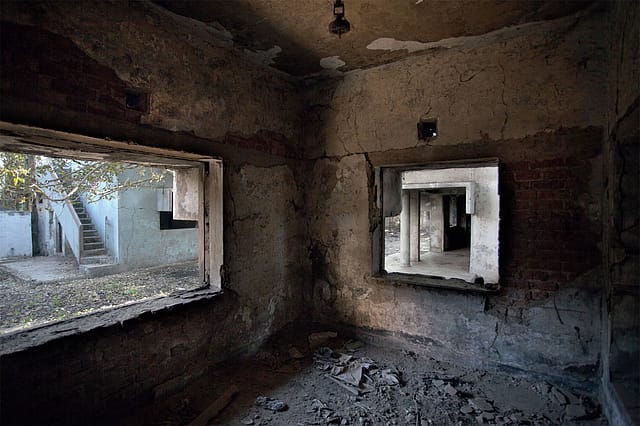
Nothing prepared me for my meeting with Rupabehn Mody (the subject of the film Parzania) in Gulberg Society, Ahmedabad, last month. These walls, blackened with soot and neglect, were once her home. I had first met her in 2002, days after her son went missing during the massacre of members of the Muslim community by a Hindu mob on 28 February. Sahmat and Citizens for Justice and Peace (led by Teesta Setalvad) had brought survivors to Delhi for a public hearing. I saw tears in the eyes of President KR Narayanan, his wife and even his hardened military attache when they met the survivors (even as the riots in Gujarat carried on). At another hearing for justice in 2006, I took portraits of these survivors— and now witnesses to acts of unspeakable brutality.
For 10 years, Sahmat has worked with Teesta and her team in support of their fight to bring justice to these survivors. But the charred and abandoned site of Gulberg even a decade later is testimony to the cruelty that communal politics can inflict on hapless citizens. As an architectural photographer, these images for me are of the site of a sacred space. Salim Sandhi guides me into the shell of what had been his home. Standing in the bedroom of his late son, listening to how his four family members were slaughtered and burnt, my camera shakes. I have not seen Bergen Belsen or the other Nazi ovens in Europe, but maybe these blackened walls are like those, and we stand here in Gujarat amid ghosts.
This year on 28 February, Gulberg will witness a memorial for those who perished, an event that will bear testimony to the resilience of those who continue to fight for justice against the might of a state that would deny them that right. Rupabehn Mody, Teesta and Salim will be there with their police guards, who follow them everywhere in their daily life. Shubha Mudgal, Aneesh Pradhan and Sudhir Nayak will bring their tribute of song. And there will be memorials to the missing and the dead—and tributes to the witnesses, lawyers, press persons and ordinary citizens who have stood by the victims.


OLDER COMMENTS FIRST
9 COMMENTS
Permalink
I am sure you would have not felt the same had the riot happened when a congress government was in power.. Why dont we hear such stories about mumbai riots or sikh riots.. Just because portraying the culprit would be difficult. Isnt it easy to target modi telling everyone that he is at fault.. Media conveniently forgets victim of other riots as it was lead by "secular mob".. And just to make my point clearer, I am not a RSS or BJP supporter. I am a supporter of development..
Permalink
Let the true justice comes out sooner for the heavenly soul who got perished by some brutal forces.
Permalink
I am a Kashmiri Pandit whose family had to flee from the atrocities of Muslim in Kashmir. Do you have balls to write an article on the plight of Kashmiri Pandits. You are nothing but a pseudo secularist.
Permalink
Dear Kashmiri Pandit, the issue here is not the injustice done against Pandits in Kashmir or Muslims in Gujarat. The issue is injustice done in the name of religion, human beings killing fellow human beings. I understand you might also have been a victim, writing an article on the plight of Kashmiri Pandits need not require balls, voicing injustice against humans on humans need balls.
Permalink
SUSHOBHIT SHARMA a kashmiri pandit ..hahahahahaa..
Permalink
It is sad to see how media writes so openly about Gujarat riots but has completely forgotten the ethnic cleansing of Kashmiri Pandits. Which Human rights activist or journalist stood by them in these years of forced exile?
Media will openly challenge so called Hindu fundamentalists in Gujarat. But, will shy away to challenge the Muslim separatists of Kashmir. Why are terrorists Yasin Malik and Bitta Karate enjoying a good life in Kashmir even after brutally killing so many Kashmiri Pandits? When will media wake up to this fact?
It's time Open Magazine puts this question challenging media into perspective. Otherwise, it seems Congress has paid for the article or perhaps SAHMAT itself.
Permalink
By now, every time I read an article about the Gujarat Riots, I'm SURE someone will comment and try to justify the violence in Gujarat with the violence against Kashmiri Pandits.
One, two wrongs don't make a right.
Two, Open and other magazines have indeed had "the balls" to write about Kashmiri Pandits. Since some commenters here don't seem to be able to use the search box provided on this website, I'd like to help them by pointing out:
http://www.openthemagazine.com/article/nation/a-surprise-in-the-valley
http://www.openthemagazine.com/article/arts-letters/the-autumn-of-hypocrisy
That's a start.
It's easy--Why don't you try typing "Kashmiri Pandit" in the search box, before getting all righteous?
(While we are on the topic, I HIGHLY recommend reading Sudha Kaul's brilliant book Tiger Ladies if you want to learn about the beauty of the Kashmiri Pandit's culture. The book is written from the point of view of their liberated, erudite women, who we never seem to hear from otherwise.)
Permalink
Right, every atrocity against fellow humans is abominable, be it Gujarat's Hindu-Muslim or Delhi's anti-Sikh riots, to just name a few. But to bracket the Kashmir Pandit problem with communal riots is to miss the vital difference of ethnic cleansing. Post-riots ,Muslims have had no further trouble in Gujarat (indeed they live in peace and going by the Sachhar Committee report, even relative prosperity) and Skhs have made Delhi their own as before but alas Kashmir Pandits have no where to go in the valley of their ancestors!
Permalink
Just for the information of the author, it is 'Gulbarg' and not 'Gulberg'. I guess Mr Ram Rahim was way too busy sharing the plight of the residents to know what the place is actually called.
Post new comment