A Fictional Boom
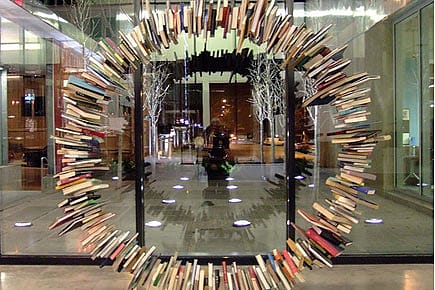
Pakistan's alleged literary boom is becoming a case of counting one's novelists before they hatch.
Pakistan's alleged literary boom is becoming a case of counting one's novelists before they hatch.
On the culture scene, 2009 has seen much talk of Pakistan's 'literary boom'. My intention had been to provide a round-up of Pakistani fiction in English (since English fiction is what the literary boom refers to), but find myself unable to for reasons I shall eventually get to. Bear with me. Certainly, it's been a great year for Pakistani fiction in English, particularly Daniyal Mueenuddin, with his debut collection of stories, In Other Rooms, Other Wonders, finding itself nominated for some terribly impressive awards and featuring on every prestigious book round-up from Time magazine to the New Statesman. It's worth noting, incidentally, that Pakistan's excitement about its own writers also started off in earnest only after they were endorsed by the Western media and Western readers, a longstanding and not particularly charming Pakistani custom (think Sufi songster Nusrat Fateh Ali Khan, who was turned from water to wine only upon discovery in the West, and then—do indulge me a moment, it's a pet peeve—was transformed in the Pakistani perception from roadside reject to the foremost proponent of qawwali, a contention that anyone actually familiar with qawwali will tell you is pure, unadulterated crap). But back to my current grouse (oh so many grievances, so little time), the alleged literary boom is beginning to remind me horribly of the Pakistani independent cinema revival, which took place in the self-contained environs of 2007, when three filmmakers released independent films followed by two, going on three, years of resounding silence.
While English literature appears to stand a better chance of flourishing (simply because it involves less funding, not because our filmmakers are any less talented), forgive me for being party-pooper extraordinaire, the assumption that good fiction in the English language can be sustained involves some heavy-duty optimism. There have been some four English novels by Pakistani authors published this year that are worth mentioning (and one only because it throws up the opportunity for gratifyingly catty asides). As far as I am aware, nothing is due to be published by the international press next year, and it may come as a surprise to some that none of the big English hits of this year have been published in Pakistan, as the local publishing industry is currently in no position to offer either lucrative advances or royalties or even, quite often, sufficient marketing to make this worthwhile. The literary boom, or blip, as it may more fairly be described, is not, as has been inferred, like the glory days when Latin American fiction attained global popularity. It's becoming a case of counting one's novelists before they hatch.

The Liberation of Bengal
05 Jun 2026 - Vol 04 | Issue 74
A silent revolution ends the reign of fear
The biggest difference between our lot and Latin American authors is that they tend to write in their native tongue, are published in their own countries and are then read in translation. They engage with their local traditions; their writing, even when read in translation, is infused with the local idiom, it has its own distinct flavour, the writers' experiences are far more broad-ranging than those of Pakistani authors in English. While I think the South Asian tendency to equate a vast canvas with an important work is completely misguided, it must surely be excruciatingly difficult to write anything with real conviction when half of your efforts go into providing explications for a foreign readership. As such, it's a bit rich to hear of some six novels in two years described as "the resurgence of writing in Pakistan", completely disregarding the hundreds of writers writing in Urdu and other regional languages who are published and outsell the English writers by a mile, garnering barely a mention in Pakistan's English media and completely unheard of outside the country. It's true to say, certainly, that the appetite for Pakistani fiction in English has shot up out of sheer curiosity. Sadly, as a direct result, much of the writing panders to just those appetites and emanates from a coterie either of expats or Pakistanis who have, at the very least, spent significant portions of their lives outside of Pakistan, and a significant portion of their lives in Pakistan in each other's drawing rooms (my drawing room, in some cases). It is a group of people so small and closely entwined that I find myself unable to provide, as I had hoped, a round-up of the best and worst of Pakistani fiction of the last year since I just remembered that I expect to be air-kissing all the authors in the coming weeks and have decided upon discretion as the better part of valour.