

Don’t Negotiate with Naxals
Those advocating talks with the Naxals should read the Maoist constitution and check what kind of room there is to negotiate.
 Hartosh Singh Bal
|
25 Feb, 2010
Hartosh Singh Bal
|
25 Feb, 2010


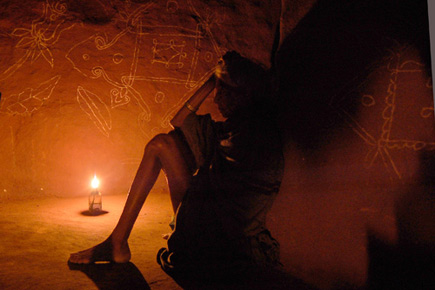
Those advocating talks with the Naxals should read the Maoist constitution and check what kind of room there is to negotiate.
Those advocating talks with the Naxals should read the Maoist constitution and check what kind of room there is to negotiate.
As the CPI (Maoist), or Naxals, and the Government face off, the real surprise is the number of those who are actually advocating negotiations precisely when the rebels are on the run. They should read the Maoist constitution: ‘The ultimate aim or maximum programme of the party is the establishment of communist society… . Encircling the cities from the countryside and thereby finally capturing them will carry out the Protracted People’s War. Because the armed struggle will remain the highest and main form of struggle… hence armed struggle will play a decisive role.’ What does that leave to negotiate?
The only thing those calling for negotiations have got right is that the Indian state has done badly by the tribals. But if it is to do better now, it can only do so by eliminating the hold of Naxals. There is nothing radical about this statement. If the Government has to institute policies that work for the tribals, it can only do so if its writ runs. The only other course would be to live with the status quo in tribal areas controlled by Naxals, and it is worth examining what that has implied so far.
In 2004, in the Chatra jail in Jharkhand, I met Ramlal Oraon, or Vir Bhagat as he was locally known, a former zonal commander of the Maoist Communist Centre (that since merged with the People’s War Group to form the CPI (Maoist). He was contesting the Lok Sabha election after leaving the MCC. His reason: tribals like him had no place in the organisation. Six years later, not much has changed. Ask yourself how many tribals figure in the top Naxal leadership after over two decades of activity in tribal regions and the unsurprising answer is very few.
Try looking through any of the CPI-Maoist documents to find specific references to tribals. You will find stray asides. The image of Naxals as defenders of tribal interests has been created by those calling for negotiations. The Naxals themselves actually do not see the world in such terms. They see tribals as they see all humans—merely as economic actors. According to their constitution, ‘Marxism-Leninism-Maoism is the ideological basis guiding its thinking in all the spheres of its activities.’ What possible sense can any tribal make of this doubly hyphenated contradiction in terms?
This is not lost on the tribals themselves. In the Narmada valley, I stayed a couple of weeks in a Gond village in Dindori, a tribal-dominated district in Madhya Pradesh. The district chief of the Gondwana Gantantra Party (GGP), Ganga Patta, lived in an adjacent village. In a few short years, his party had become a formidable force, placing MLAs in the state legislature by working on exactly the kind of programme that the Naxals have no time for—cultural renewal and an assertion of Gond identity. He told me: “Today a bus driver from outside the region does not show the contempt he would show for a Gond only a decade ago. The police listen to us. These are the things that make a difference.’’ On the Naxals, he was categorical: “They are using us for their ends. We will not let them enter our areas of influence. Given a chance, we will chase them through the very jungles we know better than them.’’ It is no coincidence that the Naxals have made no headway in and around Dindori.
This is the truth about these Naxals. They will never contest elections because they lack popular appeal even in their strongholds. Prominent Naxals who have attempted to do so have fared badly. And for all the noise about the Salwa Judum being a state-sponsored entity, to imagine that tens of thousands of tribals can be easily herded into doing something they don’t want is to patronise them. Or are we to believe that where the Naxals are concerned, the tribals make up their own mind, and where the State is concerned, they do not? Between the two entities, at least the State can be called to account, however imperfectly.
Who, then, are these people who have arrogated the right to speak for the Naxals in the name of tribals? I can only guess. None of them are tribals, many of them were last seen energised in the defence of similar armed thugs who held up the vast majority to ransom in the name of the Khalistan movement. Either they are people turned on by the idea of violent revolution, the overthrow of a ‘bourgeois’ State or they are our version of ambulance chasers seeking employment in the defence of the indefensible. Take your pick. Whatever the answer, the best interests of tribals is not what they have in mind.
About The Author





More Columns
Why I Don’t Look Back in Anger Boria Majumdar
The Playful Past Rati Girish
“The day you say Modi is 'satisfied’, you can say you are paying homage to him” Open