Assignment

Aimee Ginsburg is the India correspondent for Yedioth Achronoth, Israel’s largest daily

EMAIL AUTHOR

Slumdog Stories

...from the land of Shanti Shanti
21
Tagged Under | Slumdog Millionaire | game shows

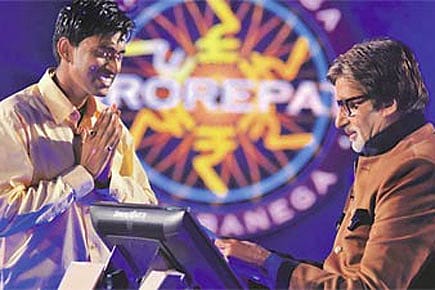
Of course everyone wanted long juicy stories about Sushil Kumar and his incredible win. They would have liked it better if Kumar had been from a real live slum, or was at least on the run from a psychopathic slave master who wanted to gouge out his eyes. Nonetheless, Kumar (happily) is poor enough to have earned the title ‘the REAL Slumdog Millionaire’, a sobriquet Kumar must have found very flattering, as any one of us would, I’m sure. Actually, my calculations showed that Kumar earned more than Rs 26 a day, so was not REALLY poor at all, a fact I kept to myself to not let down my editors who were very excited about the whole thing. I almost lost my job the night that Slumdog Millionaire won its Oscar. So, when the KBC story popped up, I promised myself to be extra careful.

The night SDM (this abbreviation thing really is great fun once you get the hang of it) won the Oscar, my newsroom woke me up from a very sweet sleep, content with a job well done. My story on the movie, complete with deep and original socio-economic analysis of the popularity of American-style game shows in India, had been filed and approved. This was to be the main magazine story of the next day, and I had included a side bar on the multi-faceted realities of life in a Mumbai slum, beyond the easy stereotypes. When the phone rang at around 2 am, I thought there must have been some disaster in my family, and I jerked awake, my heart beating. “Are you there?” asked a young sounding someone, “hello?” Gee, it’s the newsroom.

It’s the middle of the night. What’s up?

“We just need to know: what’s the price of a child slave in India?”

Come again?

“We are adding text to your story, spicing it up a bit. Your copy is great, don’t worry, but we just want to add some juice. We have a great idea! We are making a chart with the prices of children slaves in third world countries. What would you say approximately is the price of one where you live?”

Hold on a minute, I will go ask at the corner child slave shop. Oh, darn, it’s past midnight, they are closed. Sorry.

“Okay, but can you find out somehow?”

Well, look, it’s been so long since the last time I bought one, I’m sure the price has gone way up. (Ironically, someone I knew had just done a story on this for a women’s magazine in Europe and it would have been easy to get the information from her, but I was not going to cooperate with this cheap drivel). I hung up the phone.

A moment later, it rang again.

What do you want? I pretty much shrieked  into the phone.

“Listen, we need your help on this,” says a voice I would recognise anywhere, at any moment—the assistant to the senior foreign editor—“Please get us the info.” I’m afraid I vented more fiercely than was appropriate on the shallow and sensationalistic thinking that drives mainstream media. Years of frustration poured out of me, all the times I had tried to report in a profound and present way, especially on social issues, only to be undermined by editors who think in two-tone and are sure their readers do as well (this was back in the days I really, really cared what readers in my country thought about India, and set out to single-handedly destroy all misconceptions).

If you want a serious story on child trafficking, say so, and I will get it. So I said, and hung up. A few minutes later, I called back to apologise to this actually very decent, sweet and helpful man, who listened quietly, and said it was okay. But in the morning, a mortifying email was in my box from my senior editor, with an official call to order. ‘Aren’t you the one in the land of Shanti Shanti?’ he ended, to soften the blow.

I knew they would want something about Kumar, but I was surprised by how long a story they wanted. I was basically forced to use every detail available: the Rs 500 spent on new clothes, the Laxmi-ness of Kumar’s new wife, the fear expressed by Kumar’s brother that their dad might (God forbid) get a heart attack and perish from all the excitement. “Now that would make for a GREAT story!” said an acquaintance, a foreign correspondent for a très respectable publication. I held my tongue. Shanti, Shanti.

OLDER COMMENTS FIRST

21 COMMENTS

Permalink

Why didn't she DO the story on child trafficking? That would have been a worthy story. She should not cooperate with this kind of journalism, she should fight harder for her ideals and not give up because of one scolding letter from an editor.

21 November 2011 | rajeev

Permalink

what IS the price of a child slave in India? Would be fascinated to know. Maybe Open can send Aimee to try and buy one and see what she comes up with. Would be a Great read

21 November 2011 | jungli jo

Permalink

Ms Ginsberg is doing the best kind of reportage. One that reports on the sensationalizing of reports by the mainstream media who follow the simple mantra - 'Good news is no news.'

21 November 2011 | Mahesh Dattani

Permalink

This is such such an interesting perspective. But I what I would really love is to hear is your "original in depth analysis of the rise of the American TV show in India". I have also noticed, on each consecutive visit, that more of the space in ads, TV, etc is taken up by money money win win than was ever true before, and it fills me with such a great sadness, Is this a patronizing sadness? No, I dont think so, i have always felt awe and not superiority towards india, that's why I come, as a pilgrimage.

But lately, I feel that those things i was making pilgramage to are not here too much anymore. Is it hte fault of KBC? of course not, but I loathe it anyway, not the show, but the hungry grovelling for more money, money....

Wish Kumar all of the best though, he seems very worthy and I hope his family enjoys a much better more easy life from now on. Om Shanti

21 November 2011 | Michelle

Permalink

great copy!

22 November 2011 | amnon katz

Permalink

entertaining and well written. i enjoyed this story very much.

22 November 2011 | jane

Permalink

In these news reports and feature stories I always love the insights I get about the culture and people of India, as well as the unique perspective provided by an obviously knowledgeable and conscientious journalist. From story to story the writing is consistently thoughtful and fascinating particularly in the richness of the details and observations that are made. No matter how serious the underlying subject matter may be, there is often a sense of delight and personal discovery that is shared so trustingly with the reader. Thanks for writing so well and perceptively about a vast and remarkable part of the world, which one day I will now, all the more, have to discover for myself.

22 November 2011 | Julian Krainin

Permalink

Unfortunately, this is how the media work. It is always difficult to tackle social issues by themselves - without the glamorous touch of celebrity...

You can say about SDM what you want - it made the world's spotlight shine for a moment or two on some serious problems.

If this helped in the long run, is questionable.

22 November 2011 | KS

Permalink

I don't care what you call me, just give me the crore and I will cry the whole way to the bank

22 November 2011 | anil sangupta

Permalink

India, the land of sensation has been much sensationalized itself! media are catching up with reel screen finally and for good many years! Ah!the dooms days are here to stay !

22 November 2011 | partha pratim barua

Permalink

Indian poverty is fine so far as life is possible. Anyone wonders where American tribals have gone, what happened to London slums or why the population is low in most western countries?Is life possible for poor there?4 hours ago ·

22 November 2011 | sulabha devpurkar

Permalink

Are you all really debating where it is better to be poor, India or the Us? Really?? Is this really the question that arises? Doesn't that seem completely inane? Not anything about these companies that have us running around like mice in a maze for crumbs while they stash away the cake for themselves only. How did they get these crores and crores to give away while the rest of us slave away? Wake Up! Occupy KBC!

23 November 2011 | Sanjeev

Permalink

@sulabha devpurkar:

"Lives at risk on Ontario's Attawapiskat reserve, chief says"

Read more: http://www.ottawacitizen.com/news/Lives+risk+Ontario+Attawapiskat+reserv...

Native Americans living in conditions worse than in the thirld world, reports this Ottowa paper. Same everywehre with the native ameircan population. Heartbreaking, and so under reported. Why does poverty in Inida attract so much more attention? What do you think?

23 November 2011 | George Hartman, Vancouver B. C

Permalink

Always interestred to read what Aimee has to say! She has a great way of making things easy to understand and relate-able. How horrifying to be awakened from sleep with question like that!

24 November 2011 | Shaari G Laver

Permalink

I don't know what saddens me more, the fact that 26 Rupees a day isn't considered a low enough wage or that your newsroom was so concerned with how bad off they could make this man look. Living life is not all about the money in your pocket or the size of your paycheck. It's thinking like this that makes India look bad to more developed nations. India is not that bad of a place and really isn't that much different overall than every other country. People are the same all over the world, the difference here is culture If all you ever write about is poverty, the rest of the world will start to look down on India and that would be a very inaccurate view
--sincerely a white American woman living in Punjab

24 November 2011 | Kristy Robinson

Permalink

AB brings such a patronizing sleaziness to the show, it is impossible to watch it. But then again--- what comes to light while watching KBC is such a strong mirror of our society, maybe it must be watched: The greed, the sleaze, the patronizing attitude towards "poor" people as if a smart poor person is some big special surprise. Truthfully, even the type of questions asked mirror the shallow direction we are taking: this is not knowledge, this is not wisdom, this is meaningless trivia which with to clog our brains. I do not think these game shows are good for us, they are taking us in a terrible direction, away from our authentic self. Om Shanti.

24 November 2011 | L. K. George

Permalink

And throughout this whole conversation, except one reader, no one has even thought about Sushil Kumar, as a real person, and wondered how he is doing, nor wished him well. Congrats buddy, hope the win really changes your life, and the lives of your loved one's, for the better. Beware of the endless traps. Would love to hear how you are doing a few years from now, and will be sincerely sending out my wishes for a happy tale.

25 November 2011 | LAMA

Permalink

It's interesting to see what goes on behind the news stories we get. As a reader, I yearn for more in-depth reporting and analysis. I don't really care how much a child slave costs, for example, and I don't need to be told much about the economics (poor children, wealthier patrons) of the trade. What I'd be interested in knowing is what the real-life experiences of these people can be---good and bad---and what is being done to protect these children. I hope Ginsburg gets a chance to dig her teeth into such a story.

25 November 2011 | JPinto

Permalink

great article. Good for Aimee to be pointing out what was wrong with the media's coverage of this story. with the original film there were mobs of reporters in the bastis where the child actors lived which caused a lot of hassle to the people who lived there.

27 November 2011 | jessica mayberry

Permalink

Great article
Check my own views on my blog www.goldensilt.blogspot.com

30 November 2011 | Ashwini Damani

Permalink

Wondering what is actually happening in Kumar's life right now. Maybe you could do a follow up?

7 December 2011 | Anthony

Post new comment

The content of this field is kept private and will not be shown publicly.

CAPTCHA
NOTE: Please enter letters [case sensitive] in the box provided before you submit your comment. This is to prevent automated spam submissions
Image CAPTCHA
Enter the characters shown in the image.