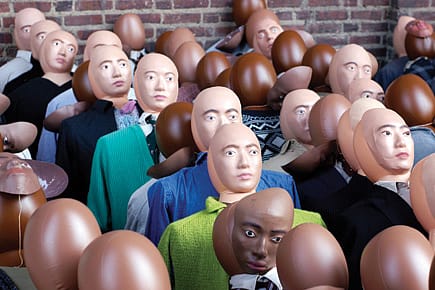
I am new on Facebook, and I am still trying to figure out what ‘social media’ means. I have been able to get in touch with schoolmates and collegemates who, when I last saw them, were mugging their butts off to get into medical college, or just pissing into a promising wind. But there is very little we have to say to each other, so many years later: where are you, do you have children, and so on. Then? Do you have anything left that you can share? The years have been many lives away, and the girl you went to see Ssssnake with, hoping she would faint in your arms, now teaches Physics in Wisconsin. Anyway, you clutched her arm when the man started developing scales and turning into a giant King Cobra. You were scared, she was laughing. Not much to be mined there.
She writes nothing, I write nothing. We have nothing in common. The others who went to see the film with us, bunking college, who knows where they are today. They must also be on Facebook. I don’t have the energy to search for them. I don’t even remember all their names. Some of them may even be dead, for all I know.
So the messages I get range from lethal non sequiturs—‘I am feeling good’—to acts of altruism that I can only classify as cries for help: ‘Let me share with you a song composed by Madan Mohan.’ Facebook has 400 million users. On average, 50 per cent log in every day. The fastest growing demographic is the 35 years and older age group (the getting in touch with schoolmates and collegemates market rocks). More than six billion minutes are spent on Facebook each day worldwide. There are more than 60 million status updates daily. More than 3 billion photos are uploaded to the site each month, as are 14 million videos. More than 5 billion pieces of content (weblinks, news stories, blog posts, notes, photos, etcetera) are shared each week, an average Facebook user spends/ wastes 55 minutes a day on the site, sends eight friend requests per month, clicks the ‘Like’ button on nine pieces of content each month, writes 25 comments a month, and is a member of 12 groups.
Psychologists have introduced the diagnosis FAD (Facebook Addiction Disorder) as a new kind of addiction disorder. Other than addiction, it has also been proved that Facebook causes intense jealousy: competition over the number of ‘friends’ you have. By the way, the average Facebook guy has 130 friends. I am way ahead of the game, with about 450 ‘friends’, 70 per cent of whom I have never known or heard of .
The word is ‘anomie’. When we lived in joint families, or rural societies, the familial and support structures were larger and stronger. Put very crudely, there were many laps to cry on, there were many people out of sync with what we call the normative who were accepted and taken care of with no thought about choice or judging, and everyone around you knew who you were. With urbanisation, we lost the connections, we got anomie, the perceived anonymity we all have and which many of us are uncomfortable with. There aren’t enough people who know your name and ask about your child’s health. Then Facebook happened.
But I don’t want to watch your honeymoon pictures. I don’t want to see photos of your child’s birthday party. I don’t want to view your dog in a playful mood. I don’t even know who you are. We all suffer from anomie. We deal with it in our own ways. Let’s at least do it with dignity.
Aren’t some things precious because you share them only with loved ones? Why do you need to share your happiest moments with strangers? Interestingly, I haven’t read a single sad post on Facebook, like ‘I lost my job today. Anyone knows of someone who is hiring?’ It’s all happy stuff on Facebook. Social media is about fairweather friends. You never communicate with your true friends on Facebook in any meaningful way. You don’t want the kindness of strangers. And you know that. That’s what Facebook is about.


OLDER COMMENTS FIRST
7 COMMENTS
Permalink
Thank you for that article. You might want to add the pressure that facebook has brought into our lives--everything is announced so everything must be acknowledged. If you don't you risk looking rude. I'm so glad you mentioned the jealousy factor, it's summer time and everyone's showing off about being in cafe in Paris, or announcing their Sphinx adventure, and I'm sweltering in plain old Karachi.
Permalink
That was a great piece as usual, but well, you're bit wrong about that, Mr. Deb- the part where you say that there are no sad posts- they're all there, as regular as the so-called 'good' posts. Why, I, and my friends average five such 'bad' posts every day.
But then maybe, we're not yet old enough to feel self-conscious to admit that our life sucks at times.
Permalink
I am not sure I agree with your write down on Facebook. Isn't it just one more platform for communications? Your logic could well have been trotted up against phones when they first came in. Why talk when you can meet? Well it is precisely who you can't meet that you call and when you can't do either you post on Facebook. So long as there is the option of not looking at those horror pics of the kids and dogs, let the Facebookers be!
Permalink
My name is Nandini and I am a Face book Addict.
I have to chuckle as i read your article. I have a whole lot of friends who sneered when I babbled about the wonderful thing called Facebook. Admittedly, I have discovered a dozen and more friends who I'd lost touch with. I am now very involved with their lives their interests. Some of these people were passing acquaintances . Now I've got to know them better. I like what they've become I relate to them even better. On the other hand there are others who were good friends who I now find I have little in common with. They disappear from my Facebook sooner or later. So hang in there, Mr. Deb, don't give up on it quite yet. hang on and discover the fun of this social networking.
My name is Nandini and I am a Face book Addict.
Permalink
Sandipan, your position is debatable. There are all kind of people in the world and Facebook gives suitable representation to them all. While some people obviously use Facebook to update the world about what they ate for lunch, there are others who use it to re-connect with friends (as you pointed out), and also to network and connect with like-minded souls. To be more specific, one of my close friends recently spent two months at a Kibbutz. She had told me about this so often when we were at college, that a decade later when she was in a Kibbutz, I lived the experience vicariously thanks to the pictures and regular updates on facebook and I learnt much about a Kibbutz. As a freelance writer and mother of a 19-month-old, my life is limited to my work and the only active socializing I do is on the internet. For people like me Facebook provides an opportunity to interact with writers, poets and others who share interests similar to mine, stay constantly updated in my chosen avocation and also to stimulate my intellect via meaningful websites, journals (like this one) and discussions. Much depends on what you choose to be involved in. We don't necessarily have to 'like' everything the people on our list like or even accept friend requests from people we don't want to engage with. Facebook can be a tool or an evil depending on the reason and personality of the person using it. It can be a private group of individuals or a platform for many to connect with their fans. Just because we get spam or useless forwards from friends we don't stop using email do we?
Permalink
Point Number One: OPEN is a fantastic magazine for the one reason that it is unafraid to be contrarian at times and surprise us with coverage others all but ignore.
Point Number Two: Mr Sandipan Deb makes an entirely valid observation that this Facebook thingamajig is the height of artificial acquaintancehood. It is for people who are depthless cardboard characters with complete social dishonesty or else such inane thoughts that they have no interest whatsoever in being discreet about them. The world is full of facebook bozos. Which is why we are witnessing a mind numbing process of thought homogenization sponsored by the cool dudes at Harvard etc (Suckerberg, you sure suckered em good). Soon, the only minds worth engaging with will be those whose minds have not been put through the electronic wringer of social media. Cyborgs are here, and they are all Facebookers.
Permalink
The first honest, 'non-propagand-ist', yet refreshing view of Facebook in a long time!
@Sandipan: Keep that cage door 'open'.
Post new comment