Two Faces of Denial in the 2G Case
The Congress and those who defended its misdeeds in the name of economic growth continue to soft pedal the extent of the problem
The decision of the Supreme Court has at least established that there was something wrong with the allotment of 2008's 2G licences. But this has not stopped the attempt to minimise wrongdoing by two sets of interested actors; one is the Congress Party, and the other is a set of commentators, supposedly trained in economics, who seem to believe liberalisation is an end in itself and politics is something that should in no way impinge on economic policy, which they claim no one other than them understands.
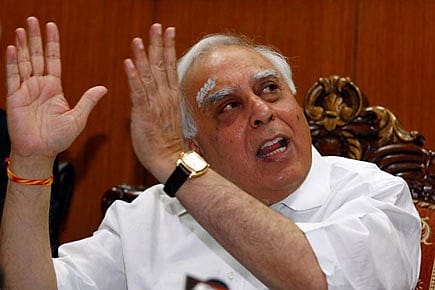
By now it is difficult not to admire 'no-loss in 2G' Sibal. The Congress must realise that each time he speaks, he manages to alienate even the most avid of its apologists, but then who else would even attempt the thankless job of speaking for the party with such effrontery and shamelessness? Defending the Prime Minister, he has to make a virtue out of the fact that the problem lies with the PMO, not the PM, a claim that is damning of Manmohan Singh. Defending P Chidambaram, he has to make a virtue of the fact that the former Finance Minister was party to Raja's decisions but not accountable for them, a claim that raises questions about the very nature of this government.

The Liberation of Bengal
05 Jun 2026 - Vol 04 | Issue 74
A silent revolution ends the reign of fear
The Congress feels that the reprieve to Chidambaram and possibility of an improved showing in UP gives it some breathing space. It hopes to use this to ensure that the first three years of this term in power can be put behind it before the next elections, especially when it is likely to face an opposition party whose ministers think nothing of watching porn in the legislature. This though is a serious miscalculation. The Anna movement may have died a natural death, but the reasons for its upsurge remain. The 2G case is not over. Further legal setbacks to the party will continue to afflict it at regular intervals. It would be poetic justice, and in this case overused clichés are apt, if the case comes to a head precisely in time for national elections.
The Congress' step by step retreat from 'no loss' to 'notional loss' to 'it is all Raja's fault' has been echoed by a host of commentators. We are now being told that the decision to cancel licences will have an impact on how multinationals look at business in India. Dismal science or not, a training in economics seems to make for dismal logic.
The 2G losses were notional only to the extent that armed men did not raid the Treasury and run away with the crores. When this became evident, we were told that the price at which 2G spectrum was sold, or to be precise given away, is what enabled the telecom revolution in the first place and that this is still what continues to ensure low cost of service. It is another matter that consumers are citizens first and they were never consulted on whether they would prefer, say, better healthcare over cheap mobile phone calls. To further make a mockery of this argument, it also became clear that the money that was supposed to benefit consumers actually went to companies like Swan and Unitech, one which was a front for the Anil Dhirubhai Ambani Group and the other a real estate firm, neither of which had any business being allotted spectrum.
With neither logic nor law left to argue with, we were showered with jargon that still continues to be employed. We were told that the money given by Telenor to Unitech, or Swan to Etisalat was a result of 'dilution of equity' and was not a sale of spectrum and hence was the result of a legal transaction. The trial court in the 2G case has also cited this as one of the reasons for not holding Chidambaram criminally culpable. This is again untenable because it evades the context. When it was evident that the allotment of spectrum was illegal to begin with, to allow further transactions that hugely benefitted these companies was also illegal.
Now the argument on offer is that companies like Telenor should not be penalised for crimes they did not commit. This requires us to believe that this group, perhaps staffed by people unable to read English newspapers published in India, could not manage the minimum in terms of due diligence. This is absurd, and both Telenor and Etisalat at the very least deserve to be penalised. The same commentators, from the very moment the scam first surfaced, have continued to speak of the dangers of corporate nervousness and bureaucratic inertia as a result of the 2G investigations. But really, this is only one more absurd claim. The lack of corporate and bureaucratic accountability was what led to the scam in the first place; if there is some nervousness, it is only for the better.