Deluge of Inaction
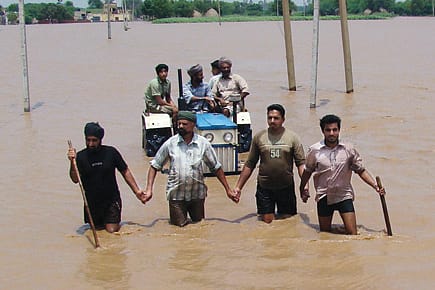
The floods in Punjab and Haryana are probably the worst since 1988. That does not, however, mean that there have been no floods since 1988. Every year, the Ghaggar river swells up and the waters breach its banks, submerging homes, affecting livelihoods, and, in some cases, causing deaths. This year, the death toll is close to 36. So far.
The floods haven’t caught the states unawares. It is just that their governments have chosen to do nothing about it. The Ghaggar, interestingly, is a river that dries up when it is not raining. Repairing the banks is easy at such times.
The floods in Punjab and Haryana are probably the worst since 1988. That does not, however, mean that there have been no floods since 1988. Every year, the Ghaggar river swells up and the waters breach its banks, submerging homes, affecting livelihoods, and, in some cases, causing deaths. This year, the death toll is close to 36. So far.
The floods haven’t caught the states unawares. It is just that their governments have chosen to do nothing about it. The Ghaggar, interestingly, is a river that dries up when it is not raining. Repairing the banks is easy at such times.

The Liberation of Bengal
05 Jun 2026 - Vol 04 | Issue 74
A silent revolution ends the reign of fear
That the river has weak banks is no secret. In Patiala alone, which is the worst affected district in Punjab, there have been over 30 breaches in the river’s banks. The district administration had identified almost all of these sensitive points and written to the state government in April, much before the rains began, seeking Rs 3 crore for repairs. The plea was turned down as exorbitant. And now, after dozens have died, the state is spending Rs 10 crore on the same repairs.
Estimates of losses vary. But none peg these below Rs 1,500 crore. About 2,000 km of roads in the two states have been damaged, and worse, as much as one-fifth of the paddy cultivation in the two states could have been destroyed. It was procurement in the two states last year that kept rice prices in check. With so much of the standing crop destroyed, prices are only going to rise post-harvest.
The Centre has now cobbled up a team to assess the flood situation, and ascertain the amount of financial assistance and relief that the Centre should provide. The Centre had already asked the two states to utilise Rs 3,500 crore from the Calamity Relief Fund for flood relief. Punjab will get a little over Rs 2,300 crore of this money, and Haryana, the rest. Ironically, about three years ago, the Punjab government had written to the Centre seeking a similar amount for repairing the state’s canals and irrigation system. Punjab’s logic was that since it had contributed more than any other state to the country’s food bowl and buffer stocks using water, its only natural resource, it needed to be compensated. The plea was, of course, dismissed as a ‘political gimmick’ by the Centre.