Conservation: the New Killer
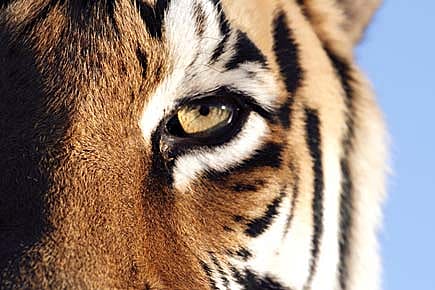
How government policies are pushing our most beloved cat towards certain extinction
There must be three particularly worried men in India's forest establishment today. RN Mehrotra, Rajasthan's principal chief conservator of forests, who rushed the tiger re-introduction programme in Sariska without meeting a single ground requirement last year. PR Sinha, the director of Dehradun-based Wildlife Institute of India (WII), who succumbed to Mehrotra's pressure and hurriedly flew in three random tigers from Ranthambore. And caught between the two, Dr Rajesh Gopal, chief of National Tiger Conservation Authority (NTCA, formerly Project Tiger), who failed to put his foot down in time and must now defend his colleagues in government.
They should worry, and for issues bigger than saving their skin.
Last month, the Government acknowledged that the condition of as many as 16 tiger reserves in India is "truly alarming". One does not need to read much into the officialese to realise that we are looking at quite a few potential Sariskas or Pannas. The only option for regenerating tiger populations in so many empty reserves will be to bring in a few from other reserves, as the Government has been doing in Sariska and Panna. Unfortunately, the Government has set such a terrible example of re-introduction that, if followed without course correction, it may put most of India's remaining tigers on the path to certain extinction.
It all began as a desperate attempt at redemption. Ever since the infamous local extinction of tigers at Sariska in 2004, it has been all bad press for those responsible for the tiger at the Centre and in the 17 tiger states of India. So once they presented themselves with the opportunity to achieve an unprecedented feat in the history of conservation, they were in an unusual hurry.
Never mind that the ground conditions that led to the wipeout at Sariska were not rectified, the Rajasthan forest department demanded that the reserve be repopulated and the Centre agreed to fly in tigers from Ranthambore last year. Between June 2008 and February 2009, three big cats—one male and two females—were rushed to Sariska. At least another half a dozen are expected to be flown down in the next 18 months.
Once the roar returned to Sariska, few were in the mood to complain about what the state forest bosses had chosen to ignore in their hurry. Villages inside the core area stayed put. Rowdy pilgrim traffic flowed unchecked. Heavy vehicles plied on a state highway across the reserve.
But the officials had overlooked something far more important in the rush.
When PCCF Mehrotra and his men were preparing to celebrate the anniversary of the world's first wild tiger re-introduction two weeks ago, my investigation for a national daily revealed that the three tigers were picked up without DNA tests or even territorial analyses. The randomly selected tigers, as luck would have it, came from the same father.
But why is it dangerous to introduce half-siblings as a founder population? Because, in a small population, their inbreeding can lead to the death of the offspring (see graphic). Over successive generations, it causes reduced fertility and sperm viability, lower birth rate, higher infant mortality, slower growth, smaller adult size, fluctuating facial asymmetry, weak immunity etcetera.
The effects of inbreeding are nullified in a bigger population through natural selection of the stronger gene. But if we try to generate a new population through inbreeding, as in Sariska, it will have no long-term viability. The selection of two tigresses for Panna was as random, but Panna is secure because it is sourcing tigers from two populations—Bandhavgarh and Kanha—ensuring genetic variation.
In the last two weeks, the Government has not tried to deny that no DNA test was conducted or that half-siblings were brought to repopulate Sariska. But, on and off the record, top officials have been trying to defend the indefensible. Sample these:
"A scat analysis done earlier in Ranthambore showed overall good heterozygosity (genetic variation). So we didn't feel DNA tests of targeted individuals necessary," says WII's Sinha.
By this logic, we could select a town for its genetic diversity and then end up blindly picking three individuals from the same lane who just turn out to be from the same family.
"It is not feasible to select genetically unrelated tigers. Inbreeding is not even a threat in the wild," says NTCA's Dr Gopal.
Ironically, in a protocol for tiger re-introduction issued by the NTCA, Dr Gopal himself underlined the importance of genetic dissimilarity in a founder population.
Not that there was no standard international practice for re-introduction. Our officials only have to look to the guideline set by International Union for Conservation of Nature (IUCN) to recognise how the international standard practice has been flouted.
► The IUCN guideline demands that only genetically unrelated animals be selected for a founder population. Our officials did not bother to ensure this by conducting DNA tests. They did not even consult WII's own photo data on Ranthambore tigers which could have helped demarcate territories (spatial analysis) and minimise the chances of selecting genetically related tigers.
► By choosing tigers from Ranthambore for Sariska, our officials did follow one IUCN guideline which recommends bringing animals from the wild stock nearest to the re-introduction site. But they ignored the next guideline that says no animal should be sourced from a bottleneck (isolated) population. Once part of an extended forest that ranged from Madhya Pradesh to Rajasthan, Ranthambore gradually lost connectivity and became a bottleneck population where no outside tigers (genes) have entered in the last three decades. The present Ranthambore tigers come from a source population of 14 tigers in the mid-70s. While it will take longer for the effects of inbreeding to be visible, most tigers here would be genetically related by now.
► The IUCN guideline also rules out taking away animals from a population if it puts that population in danger. So now, if our officials conducted thorough DNA tests and took away the few
genetically unrelated tigers from Ranthambore to Sariska, it would further reduce the genetic diversity in Ranthambore, leading to severe inbreeding.
"It's very depressing that no one seems to be worried about the genetic decline resulting from inbreeding in so many small tiger populations in India," says Peter Jackson, former chairman of IUCN CAT Specialist Group, and the only person other than Jim Corbett to have a tiger subspecies named after him.
Concurs PK Sen, former director of Project Tiger: "In reserves linked through forest corridors, a bigger breeding population keeps the gene pool healthy. But one must be careful while selecting tigers from a pocket reserve like Ranthambore. So DNA testing is a must before re-introducing tigers, particularly when we are repopulating from zero."
"Inbreeding may take many generations to show effect, but it may also wipe out populations. Of course, getting siblings for a founder population is strictly not done. I think, instead of taking chances, we could bring tigers from different source populations when we have the option," says Dr Uma Ramakrishnan, scientist with Bangalore's National Centre for Biological Science (NCBS), whose paper on tiger genetics is about to be released.
Jackson elaborates on this: "Ranthambore's tiger gene has been damaged by inbreeding. Given that, it seems to me quite wrong to send only Ranthambore tigers to Sariska. I think they should be from different genetically healthy populations like Kanha."
So why didn't the Government bring tigers from different reserves to Sariska, just as Panna is getting from Bandhavgarh and Kanha? Why weren't a few tigers from other reserves brought to Ranthambore to give the stagnant population a genetic boost? Because our policymakers refused to shed their blinkers.
The re-introduction policy of the Government is based on the assumption that tigers in India—Panthera tigris tigris, one of the nine global subspecies—show unique genetic traits in their different geographic isolations. Referring to a 2008 research paper by Dr SP Goyal of WII, experts in the Government insist that tigers in these geographical isolations—northern, north-eastern, southern, western and central—have become genetically unique and must not be mixed.
After the local extinction in Sariska, Ranthambore is the only remaining tiger population in the so-called western landscape. So, according to the Government's present policy, even if the population is suffering early inbreeding in Ranthambore, tigers from other landscapes cannot be sent here, lest genetic mixing take place. Going by the same logic of purity, all tigers for Sariska must come from Ranthambore, the only existing western population.
But is this policy scientifically sound? Arguably the most significant work on tiger taxonomy, by Dr Stephen J O'Brien in 2004, found a new subspecies—Malayan tigers (Panthera tigris jacksoni)—that was earlier considered part of the Indo-Chinese (Panthera tigris corbetti) population. This landmark study also reaffirmed that the entire Bengal tiger population was one subspecies.
Dr Goyal used much shorter gene sequences and much fewer parameters than Dr O'Brien did, and anyway, even his results do not show any significant genetic difference among Indian tigers other than those in the northern landscape comprising Corbett and Rajaji national parks. Anyway, Dr Goyal's study merely recommended sourcing tigers for Sariska from Ranthambore and did not say anything against similar sourcing from Bandhavgarh or Kanha.
"Nothing in his (Dr Goyal's) paper indicates any significant genetic difference between the western and the central tigers. If two populations have been separated naturally—as leopard cats in north and south India have always been—it is wise not to mix the two populations because it will interfere with the natural evolutionary process. But where the separation is man-made, [as with the] historically recent loss of forest connectivity, there would be no harm in mixing populations," according to Dr Shomita Mukherjee, wildlife biologist with NCBS.
Agrees Dr Ullas Karanth, one of the world's foremost tiger scientists: "I do not think there is any problem in introducing tigers from neighbouring populations. Anyway, the central and the western forests were connected in recent history. And if there is any doubt, molecular tests can always resolve the issue."
Only a decade ago, when the future of the highly inbred Florida panthers was in doubt, a few female Texas pumas were introduced to give them a genetic boost. That introgression was successful and signs of inbreeding (crooked tails and cowlicks) decreased among Florida panthers. Today, with 20 per cent of the Texas puma's genetic make-up, the Florida panther is still listed as a separate subspecies.
"It is more a question of adaptation. Texas panthers showed good adaptability and their reintroduction was a success. Tigers have survived in all types of climate – from Siberia to Sunderbans. I do not see why tigers will have a problem if they are moved between Madhya Pradesh and Rajasthan. But if we want to be genetically sure, we have to conduct a thorough study of adaptive variations —for example, genetic specifications that make a population cope better with heat. But even such a thorough genetic study should not take more than 8-12 months," explains Dr Ramakrishnan.
Agrees Dr Qamar Qureshi, a senior scientist with WII: "We need to go a little further into the molecular study before deciding whether we can mix the Madhya Pradesh (tiger) population with Rajasthan's. At this stage, we do not have enough data. Even if the three tigers brought to Sariska are siblings, we can offset the recessive effect by selecting a few genetically unrelated tigers for future reintroductions."
Sen, for one, will rely on common sense: "We may well conduct thorough studies. But we know that Ranthambore's population is bottlenecked and that Rajasthan and Madhya Pradesh had forest connectivity in the recent past. So there is no harm in bringing a few males from Bandhavgarh or Kanha to Sariska. Of course, females can be brought from Ranthambore."
Dr Mukherjee backs Sen: "Care should be taken in bringing in females who know each other. In a cat social system, neighbouring females are usually related. In fact, it is better to bring two neighbouring females, sibling or not, for a new population. But the male must be genetically unrelated."
But Valmik Thapar, the world's most prolific tiger author, insists Ranthambore should not be further compromised. "No tiger should be removed from Ranthambore till we conduct a study to verify if Ranthambore has a surplus, genetically sound population to serve as a source. Also, we need to take an informed decision on bringing tigers from different reserves to boost genetic viability," according to him.
But it might be more than science that explains the Government's approach. "Ranthambore-Sariska and Bandhavgarh-Panna are both intra-state transfers of tigers. The Government is perhaps seeking an excuse to avoid political embarrassment in failing to accomplish inter-state transfers of tigers, as between Bandhavgarh and Sariska. We all know how efforts to bring a few lions from Gujarat to MP to set up a second lion sanctuary failed, though both have been BJP-ruled states for a long time," points out Fateh Singh Rathore, ex-conservator of Ranthambore.
Be it bad science or good politics, the present ad hoc models of reintroduction threaten the future of India's few surviving tigers. Except in a few contiguous landscapes, India's tigers survive in small populations in fragmented forests at different stages of inbreeding. Our obsession with purity will leave them to peter out in genetic isolation.
"Successive governments have done precious little to re-establish forest corridors and buffer areas for healthy tiger dispersal which remains the only long-term prescription for conservation," says Dr Dharmendra Khandal, a Ranthambore-based wildlife biologist. "In the short-term, we should use this reintroduction drive to genetically boost populations. Unless, of course, the Government believes poaching and conflict will wipe out tigers much before inbreeding does."
In his early weeks as the Union minister for environment and forests, Jairam Ramesh has grabbed enough newsprint and airspace by making popular noises on hiring light aircraft for jungle surveillance and bringing back the cheetah. It's time for some hard decisions.
Jay Mazoomdaar is an independent journalist. He broke the story of the local extinction in Sariska in 2005