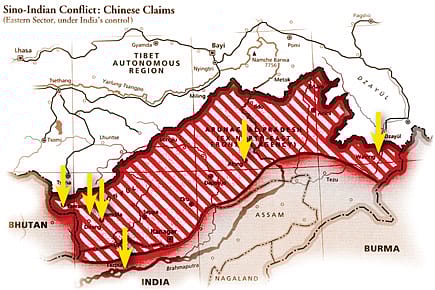
India had only two divisions of troops in the region of the conflict, and as a result, China registered major gains over India and seized Rezang La in Chushul in the western theatre and Tawang in the eastern theatre. The Chinese strategy was clear: the main assault was launched in the eastern sector, while a simultaneous but smaller assault took place in the western sector. All Indian troops in territories that China claimed belonged to it in the eastern sector were ousted before China declared a ceasefire in November 1962.


OLDER COMMENTS FIRST
2 COMMENTS
Permalink
Look closely. Today there's a sense of deja vu. Before '62 the then defence mininster went and signed a deal with the Chinese. This was after major sino incursions into sovereign Indian territory. Now, there've been major chinese incursions into our territory. And our defence minister has just signed another optimistic deal with the chinese. What next? I believe we're headed for another Indo-Sino war. Soon, by 2012. Of course limited in extent but significant force levels will be deployed. Lets hope its not another tragedy like '62. Lets be clear about one thing- THE CHINESE CAN NEVER BE OUR FRIENDS LET ALONE OUR "BHAI-BHAI''. They have our business community fooled by helping them make huge sums of money. Without realsing they're having wool pulled over their eyes. The Chinese have inherently two distinct blocks in their military and political leadership. One of them are the pragmatist who are dedicated towards making China powerful, a superpower at peace with the world. The other block is made up of people who have expansionism through military might in their sights. At present, its a stalemate. But it could change and the catalyst could be a limited military adventure on the indian border. Because then the powers revert to the military and the communist party council where the war mongers roost.
Permalink
Kapil Sharma demonstrates pretty amply that the fear and paranoia over China is still alive and well nearly 50 years on from the war. This perhaps is due to the Indian government own refusal to own up to it's part of the war even till today.
To put it simply, Nehru started it and started it badly. He sought to reclaim the legacy of a Britain imperial India border without regard to the justice of such a claim. The China India border was a border drawn by coercion, and instead of having the moral fortitude reject and condemn all injustices of British imperialism, he greedily lay claim to the fruit of such an injustice.
Post new comment