Goodfellas
How South Indian cricketers are different
In 1962, India's leading off-spinner Erapalli Prasanna, already a Test player with a tour to the West Indies behind him, decided to take a break from the game to pursue his engineering studies. He returned to the squad five years later, better educated, and a better bowler to boot, as he reassumed the mantle of India's strike bowler.
The man who took over in his absence, Srinivas Venkataraghavan, qualified as an engineer too. He was, and continues to be, a man of wide interests—Carnatic music and history, journalism, cricket administration and umpiring. When India resumed cricket relations with Pakistan in 1978, Venkatraghavan was the only player to visit Mohenjo-Daro. He is the only cricketer I know who can mention historian Vincent Smith in casual conversation. What is it about players from the South that makes them different? Where cricket is concerned, the South is another country, with its own culture, its distinct texture. An occasional Bishan Bedi, with his collection of cricket books and ability to quote from them, seems the exception north of the Vindhyas. India's most successful bowler, Anil Kumble, came through an election to become the President of the Karnataka State Cricket Association, as did his teammate for many years, Javagal Srinath, who became the secretary. Both are qualified engineers.
In the current Indian team, VVS Laxman, having to choose between medicine and cricket, gave himself a deadline before falling back on academics. He comes from a family of doctors. Even a middling record might have been seen as a failure, and the player might well have been the black sheep of the family. By backing his talent, he emerged as one of contemporary cricket's most popular batsmen, with a record of batting under pressure unmatched by colleagues with better averages and more centuries.
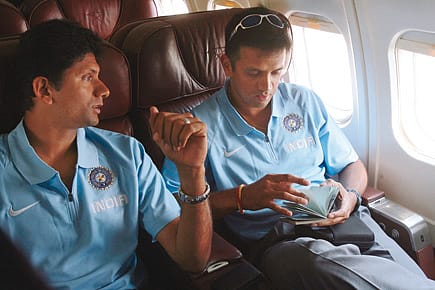
Rahul Dravid, a commerce graduate, would have been a star student even wit-hout the cricket. On tours, he visits bookshops. But his reading is not restricted to books on cricket or the usual sportsman's diet of self-help and inspirational guides. He is the only current player I know who has read Ramachandra Guha's India after Gandhi. Recently, he recommended to me Matthew Syed's Bounce.

The Liberation of Bengal
05 Jun 2026 - Vol 04 | Issue 74
A silent revolution ends the reign of fear
Kumble, who inaugurated a festival of Sanskrit literature in Bangalore the other day, is passionate about wildlife and photography, often combining the two to dramatic effect. He has turned author, with Wide Angle, a coffee table book on his cricketing days, containing photographs taken by him. How much of all this is a result of temperament and how much education is hard to tell, but one certainly influences the other.
With cricket's cradle-to-bank system, it is difficult to imagine teenagers who have made it to Ranji Trophy teams taking a chance on falling behind by deciding to focus on academics instead. India's finest batsman is a dropout, as is the country's greatest all rounder (although he was on the rolls of a university for playing). But, as Bedi has said, "Sachin Tendulkar's university is the university of life. He has learnt more there than he would have from his geography textbooks."
Interestingly, the more successful you are as a player, the more likely that you will be forced to attend a finishing school where bearing and composure are drilled into you. Advertising agencies round off the rough edges and prepare a player to walk and sound like he means what he says in the commercials. A good example is Irfan Pathan, who, when he first made the international grade, came across as a rough, uncertain, diffident speaker. Today, he is confident, carries himself with dignity and speaks English with panache. A similar makeover is apparent in his brother, Yusuf Pathan.
Of the country's top ten batsmen (in terms of aggregate runs), only five are graduates; three are from the south. Among top bowlers, six are graduates, five of them from the south. Perhaps education makes southerners more cunning! This is not as far-fetched as it sounds, because spin bowling, the strength of the south, is about deception, of leading the batsman into playing the ball that is not there, of making him believe it will turn one way but sending it the other.
"Education is vital," says Kumble, whose pet project is a graduate course for players whose education is affected by their playing schedules. It is an attitude that has led to the stereotypical southern cricketer: intelligent, better educated, cultured, modest and better spoken than his counterparts from other zones. Most of them are also steeped in the game's lore.
In his early days, Kumble was aware of the leg-spin tradition he was heir to—not just Subhash Gupte and Bhagwat Chandrasekhar, but the South African googly quartet at the beginning of the last century. It is unlikely that any international batsman from the South would have said, like Virender Sehwag did after nearly breaking (with Dravid) the record held by Pankaj Roy and Vinoo Mankad for the biggest opening partnership, "I have not heard of Vinoo Mankad."
Nor would any bowler when introduced to Sunil Gavaskar say, "Yes, I know you are the commentator," as another India player did.
The two strains worth exploring in the southern players' distinctive character are Brahminical inevitability, and a conservatism that comes mixed with insecurity. Even before the days of Prasanna, whose father told him he had to focus on his studies no matter what, the southern parent's mantra has been: academics before sport. It might have mutated into 'academics alongside sport' over a period, but we are still some way before 'sports above everything else' takes over. Cricket as a career is beginning to be seen as an option, however, but this might be at the cost of education.
Chennai, Hyderabad and Bangalore have traditionally been cities of academic excellence. There is a certain inevitability to a child going from school to university to a 'safe government job'. The government might have been replaced by an MNC as the aspiration, but, in essence, the story has not changed. Add to that the uncertainty of a sporting future, and the insecurity that comes with it, and the cry is for 'something to fall back on.' That 'something' in the south has always been education, even among the wealthy businessmen and technocrats who keep the chair warm for their offspring.
In Kerala, the recent success of Sreesanth (an aggressive exception to the general rule on cricketers from the South) might have reversed the process. The conviction that there is lots of money to be made—sport as business—if you are noticed as a talented player is driving a generation. With Kochi now a team in the IPL, where money speaks louder than a Sreesanth appeal for leg before, the trend is likely to gain momentum.
The south has had a reputation for decency in cricket for many decades now. When former India captain Tiger Pataudi found the politics in Delhi overwhelming, he shifted his cricketing base to Hyderabad, where he was happy to play under his good friend ML Jaisimha. Likewise Abbas Ali Baig, who also shifted from Delhi to Hyderabad.
A decade ago, that decency combined with integrity ensured that Indian cricket didn't collapse as a result of the match-fixing scandal. As captain, Kolkata's Sourav Ganguly, and as the face of Indian cricket, Mumbai's Tendulkar, played crucial roles in this. No less important was the contribution of the southern brigade: Kumble, Dravid, Srinath. That India were able to find players of such standing across the country made up for the fact that there was another lot also from across the country who were leading actors in the match-fixing scandal.
Much later, when a television channel approached Kumble to do a programme, negotiations were going swimmingly till he discovered that he would have to share the studio with a player tainted by the scandal. He pulled out of the deal without a moment's hesitation.
Poise can be taught, culture can be imbibed, and education is not just something you pick up in a classroom. Nor is class something you pick up in an education room. Yet the South's culture of academics moulds its cricketers.
Indian players have graduated from Oxford and Cambridge, and one of them, Ashok Gandotra, even won a Rhodes scholarship (his other claim to fame being that he is the only player to have been born in Rio de Janeiro). Dilawar Hussain, the heavily built wicketkeeper who made two fifties on his Test debut, was probably India's most qualified player academically, with a PhD. The Jalandhar-born player was principal of colleges in Aligarh and in London.
But how long will education continue to matter? In the IPL era, would a modern-day Prasanna follow his father's wis-hes? After watching Gautam Gambhir rake in Rs 11 crore for six weeks' work, I expect many once-promising youngsters are awaiting telephone calls from their fathers. With an apology for telling them: "Studies before cricket."