qed

Hartosh Singh Bal turned from the difficulty of doing mathematics to the ease of writing on politics. Unlike mathematics all this requires is being less wrong than most others who dwell on the subject.

EMAIL AUTHOR

Bhopal: The Other Story
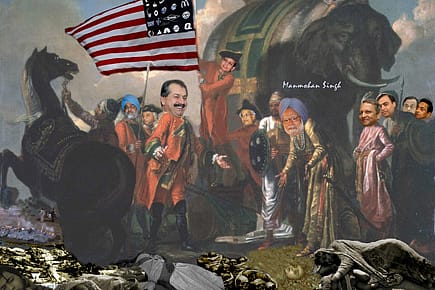
Or why the Bhopal Gas victims are better off without the hordes that will descend—yet again—to feast on the 25th anniversary of the tragedy.
12
Tagged Under | anniversary | Bhopal Gas Tragedy

During my first year in Bhopal as state correspondent for The Indian Express I was left bemused by the hostility and suspicion with which victims of the gas tragedy greeted the annual deluge of visitors from Delhi and abroad on the December 3 anniversary. By the time I left Bhopal I had come to share this attitude.

It is not as if the victims do not need help. Each day more than 6,000 still seek medical aid for a host of respiratory ailments at designated medical centres. For them the process is an exercise in daily humiliation and there is almost none to help them out. The Monitoring Committee for Medical Rehabilitation of Bhopal Gas Victims set up by the Supreme Court in 2004, a full 20 years after the tragedy, has been without a chairperson for the last year and a half.
Bhopal itself has two prominent organisations working for the victims. While both have moved the court in several cases to seek relief and justice, on the ground they operate in very different fashions. The Bhopal Gas Peedit Mahila Udyog Sangathan, led by Abdul Jabbar, focuses on helping the victims in their daily quest for medical help. The other, the Bhopal Group for Information and Action, led by Satinath Sarangi, focuses on efforts to inform the outside world of what is unfolding in Bhopal.

Abdul Jabbar is a man who speaks little or no English, his organisation has very little presence on the Web, yet for the victims, he is the only one who can help out with their daily struggle. Satinath Sarangi is fluent in English, hosts a website that provides detailed information on every aspect of the tragedy and is the link between Bhopal and the outside world. His work in Bhopal is limited to an ayurvedic dispensary.

When I first reached Bhopal, I thought the two were an ideal foil for each other. But as is now common knowledge among activists, the two detest each other. Over the years this has resulted in the erasure of Jabbar’s role outside Bhopal simply because foreign correspondents, representatives of international NGOs as well as reporters from the English language Indian media reach Bhopal requiring pre-digested information. In the day or two they spend in the city they want their hands held by someone fluent in English who can mediate between them and the victims. Satinath fits this role perfectly, Jabbar doesn’t.

In 2004, reporting on the twentieth anniversary for Tehelka, I wrote of my fear that the outside world would mistake Satinath’s message for the reality of Jabbar’s Bhopal. As if in confirmation a few years later, Indra Sinha published his book Animal’s People that places a character clearly based on Satinath at the centre of the victims’ struggle in a city based on Bhopal. A part of the proceeds from the sale of the book go to Satinath’s organisation.
When I alluded to this problem in an earlier column, Indra Sinha weighed in with claims about the autonomy of fiction. But where events such as the Bhopal tragedy or the Gujarat riots are concerned, fiction loses its autonomy. No writer can claim he has the right to mould such material to his will. However reasonable the intention, a half-truth in this setting is an abomination with unfortunate consequences. The victims themselves can hardly raise money to support the organisations working in Bhopal, funds flow in from outside and they do not flow equitably. Thanks to patrons such as Greenpeace and Indra Sinha, Satinath is flush with funds, Jabbar has none. The money from the outside world goes mainly towards providing more information on Bhopal to the outside world while the man whose help the victims most need is left bereft.

No doubt I will hear from many indignant activists, but don’t be fooled. The people who Jabbar helps have little or no access to the English media or the internet, they won’t be writing in. If you want the truth, don’t pay attention to those who parachute in for a day or two or those who claim to understand Bhopal from London, don’t even take my word for any of this. Go to Bhopal armed with a knowledge of Hindi and see for yourself. Allow yourself a month or two in the city to see how the victims who cannot obtain the medicine they need are helped by a story on the front page of the New York Times or a book on the Booker shortlist. Perhaps, you will also come to know why they remain sceptical of the hordes from outside who will descend to feast on another anniversary.

OLDER COMMENTS FIRST

12 COMMENTS

Permalink

Some one had to say it some day. I am glad Hartosh Bal has done it.

29 November 2009 | N D Sharma

Permalink

I can only share my personal opinion and experience here. I am a part of Students for Bhopal and similar other groups which support Bhopal survivors. Though I haven't visited Bhopal personally, but interacted with the survivors and attended the more-than-6-months long dharna at the pavement of Jantar Mantar in Delhi. And I strongly object to the following line -

"His work in Bhopal is limited to an ayurvedic dispensary."

At cost of being sounded like a Satinath-fan (even though I am not) I have seen him fasting there, getting beaten by Police, fighting for justice, fighting for Bhopal like other survivors. And I do respect him as well as other Bhopal activists for their efforts.

It's nothing new that there are conflicts among the leaders of popular movements.

Although I do appreciate Mr Bal's effort to bring out work of Abdul Jabbar, in my humble opinion that can be done without disparaging others' efforts.

2 December 2009 | Satabdi Das

Permalink

I can only share my personal opinion and experience here. I am a part of Students for Bhopal and similar other groups which support Bhopal survivors. Though I haven't visited Bhopal personally, but interacted with the survivors and attended the more-than-6-months long dharna at the pavement of Jantar Mantar in Delhi. And I strongly object to the following line -

"His work in Bhopal is limited to an ayurvedic dispensary."

At cost of being sounded like a Satinath-fan (even though I am not) I have seen him fasting there, getting beaten by Police, fighting for justice, fighting for Bhopal like other survivors. And I do respect him as well as other Bhopal activists for their efforts.

It's nothing new that there are conflicts among the leaders of popular movements.

Although I do appreciate Mr Bal's effort to bring out work of Abdul Jabbar, in my humble opinion that can be done without disparaging others' efforts.

2 December 2009 | Satabdi Das

Permalink

reporting these matters requires little more than pushing one's own opinion.

one of the reasons of having an ayurvedic despensory is that the alopathic medication was reacting to the already exiting toxins inside gas affected people.

it requires slightly more maturity to understand that just because someone is getting supported from the world outside doesn't mean he has a doubtful association. it is not mr sarangi's fault if he can speak English.

we have a huge population of people who have undergone the backlashes of worlds worst industrial disaster.and people have got associated to this movement from very different ideological bends and backgrounds.and for the same reason one's view of other's approach may not necessarily be appealing. That by no means takes away the magnitude of work people are doing in their own ways and with a lot of integrity.

this kind of reporting places suspition on the faith and effort of people who are leaving no stones unturned to fight what has happened in bhopal and to ensure no more bhopals happen.

please do some check on the impact these reports can have before they are placed in a public space

2 December 2009 | anand

Permalink

Thank you for this long-awaited article that says it like it is. Mr. Sarangi - who is not a Bhopal gas victim and arrived on the day after - has created almost a cult-like following in the West, who see no reason to look past him and his involvement in the Bhopal campaign when they engage.

There is NOTHING any individual or group can do in Bhopal on the issue without Mr. Sarangi's approval - a non-victim, I must add again.

He has a few close friends and admirers internationally who have helped to funnel large amount of funds to Mr. Sarangi and his cronies, who now do as they please, and completely undermine the genuine efforts of other such as Mr. Jabbar.

This, in my opinion, is the other Bhopal disaster.

And for the comment which talked about getting beat up by the police and hunger strike as major accomplishments, have you ever been to India? These are regular occurrences, sort of rituals, in the Indian activist landscape.

3 December 2009 | Rajeev S

Permalink

Since, I'm from Bhopal and have seen both Sarangi and Jabbar's works very closely as mediaperson. I'm completely agree with you. The characters of Sarangi and Jabbars ( no doubt, both are wonderful person and have social committment to work for Bhopal gas victims) reflects the today's media's nature.

3 December 2009 | Som Patidar

Permalink

Nothing can be far from truth than the author's personal views of the dynamics.
I have met Rashida and Champa didi, two leading voices of the Bhopal Gas peedit mahila sangathan and other younger members of their organization, a few times between 2003-present, the first one being in 2003, when they visited the US to receive the Goldman environmental award. If their voices are being heard the world over, and their work is being recognised, it is because of one man's dedication to the cause, and that is of Sathinath sarangi. In ths past few years, I have helped orgaised several events hosting them in my university and on radio talk shows, to raise awareness of the ongoing saga in Bhopal, and in all these events, the Bhopal survivors tell their story via Satinath sarangi.

If the struggle of the Bhopalis is alive 25 shameless years later, and everyone around the world, including many in India, who otherwise wouldn't care a damn about what the Bhopalis are going thru, know about it, it is because of every Bhopali activists, which includes Satinath, Jabbar, Rashida, Champa, volunteers of Students for Bhopal and of ICJB around the world, who has been touched by the stories of the survivors.

While I empathise with the plight of the Bhopal survivors, who would be encountering media people at the end of the year, everyyear, articles like this "other story", literally undermine the struggles and the work of those who are trying to do something more meaningful and make a positive impact.
Not to mention that many of author's impressions about Satinath's ayurvedic hospital are plain wrong.
Please visit www.bhopal.org or www.studentsforbhopal for more information.

3 December 2009 | Divya

Permalink

As a physician who has been associated with the disaster since 1984 and worked with the International Medical Commission on Bhopal (IMCB), I have to agree with the basic premise of this article. The media-savvy activist, Sarangi, tends to view medical/scientific information through a political prism. While this may be expedient in the short run, this may work against the long-term interests of the victims. Scientific data needs to be dispassionately analysed to formulate good health policy. e.g. a finding of genetic malformation or growth retardation may be used for media purposes, but can also cause anxiety in populations which are actually experiencing these effects. If the studies have not been conducted properly, this can result in unsubstantiated information causing needless anxiety. Jabbar, the low-profile activist, on the other hand, connects well with people and has a humanitarian approach to their problems. I do not doubt either person's commitment to the people of Bhopal, but wish they could cooperate the way they did in 1993-94 when helping the IMCB with its work.
In the real world of money and media, this is unlikely to happen.

5 December 2009 | Ramana Dhara

Permalink

Hartosh Singh Bal is right to praise Abdul Jabbar’s tireless grassroots work with the victims of the gas disaster, but the tone of his article does no service to these survivors or the movement which has spent 25 years campaigning for justice. I am no doubt one of the non-Hindi speaking foreigners who he condemns, but I have been overseeing a research project into the survivors’ movement for the past two years, in collaboration with Hindi-speaking Indian researchers. Our book ‘Bhopal Survivors Speak’ includes interviews with survivors and activists from all the major campaigning groups (available from www.word-power.co.uk).

Jabbar has certainly provided immeasurable help to gas survivors through his persistent, even obstinate advocacy on behalf of others, his mobilisation of survivors and his provision of economic rehabilitation to younger victims. Satinath Sarangi on the other hand has communicated internationally and mobilised international support both practical and political, an essential response to what remains an international crime, with the culprits still at large in the form of US multinational Dow. Sarangi and his colleagues have also established a clinic which has treated over 20,000 gas victims with allopathic and ayurvedic medicines, have initiated innovative research into ill health and disabilities caused by the gas, empowered many activists including the young generation of survivors. They have raised the issue of water contamination up the agenda, ensuring that thousands of people living near to the Union Carbide factory now have access to uncontaminated water. In addition, other activists, supporters and solidarity groups, affiliated with neither Jabbar nor Sarangi have focused on other groups of survivors: the poorest dependent on state pension, the railway workers, disabled children, the unorganised sector, young workers, vulnerable groups and so on.

Anyone who has studied social movements knows that disagreements and divisions are not unique to Bhopal. The diversity which this brings can be a strength. However, the movement would be stronger in its long struggle for justice if it were more united and nobody is helped by journalists seeking to fuel divisions.

11 December 2009 | Eurig Scandrett

Permalink

This article is written in very poor spirit. Instead of being cynical about Satinath's efforts, you could have brought out a positive story, detailing Jabbar's efforts and impact on the ground.

And indeed, if you wished to target Satinath, at least you should have more substantial points, than just him being fluent in english, having got international attention or doing work 'limited' to a dispensary.

12 December 2009 | Ashis

Permalink

But what he said is also true if not in respect to Satinath then in respect to the general despicable trends/persons in the country who amass donations and wealth by begging all over the world in the name of such victims of disasters and on majority of occasions gulp themselves and grow fat and rich. Ours is a country full of hooligans of various types who would even cut a dead person's throat to snatch a necklace if it is otherwise not possible!

10 February 2010 | MALLIKARJUNA

Permalink

9 March 2010 | williamdoctor

Add your comment

The content of this field is kept private and will not be shown publicly.
CAPTCHA
NOTE: Please enter letters [case sensitive] in the box provided before you submit your comment. This is to prevent automated spam submissions
Image CAPTCHA
Copy the characters (respecting upper/lower case) from the image.