Shadowy Evidence
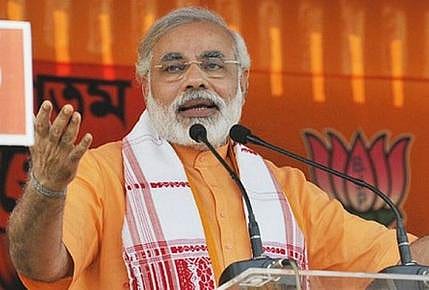
As the country investigates Modi's role in Gujarat's 'communal riots', a rumoured late-night meeting holds the key.
In 2002, after the torching of a train coach in Godhra that killed over 50 kar sevaks (Hindu volunteers, a description that the English media has hesitated to employ), and the retaliatory massacre of Muslims in Gujarat, which was wrongly called 'communal riots', I travelled several times to Ahmedabad to cover the aftermath for a news magazine. There was a rumour, which then had the quality of common truth, that on the night of 27 February, a few hours after the Godhra incident, Chief Minister Narendra Modi had hosted a meeting of top state bureaucrats. In those circumstances, it was natural that a CM would host such a meeting. But what transpired in the meeting was the subject of the rumour. It was believed that Narendra Modi had told his most powerful officials that a Hindu retaliation was inevitable the next day, and that the state's law-and-order machinery must be switched off to enable people to vent their feelings. It was clear to me that there was no way the rumour could be verified unless someone who was present at the meeting decided to speak. Considering Narendra Modi's power, which was derived from his genuine popularity among the people of Gujarat, it seemed highly improbable that a bureaucrat would have the courage to speak.
One day, by pure chance, I discovered something odd. I was at an organisation called Prashant, a human rights pressure group. Someone there, inadvertently, told me that a senior minister from Narendra Modi's cabinet had visited the place earlier in the day. It was supposed to be a secret visit, and from the panic on the face of a senior official when I asked if a minister had visited, I knew something important was going on. I eventually figured out that it was the state's revenue minister in the cabinet, Haren Pandya, who had visited, and that he had deposed before a citizen's tribunal which included prominent people like the former Supreme Court Chief Justice VR Krishna Iyer and retired Bombay High Court judge, Hosbet Suresh. I called Justice Suresh, who confirmed that a minister had deposed but refused to confirm that it was Pandya.
Survival Instinct
22 May 2026 - Vol 04 | Issue 72
India navigates global economic turmoil with austerity and smart diplomacy
I went to meet Haren Pandya who lived in an austere middle-class apartment block. He was unhappy when I told him that I knew about his deposition and that the magazine would run the story next week. He said that I must protect his identity; in return, he would give details of his deposition. He had told the tribunal that though he was not present at the meeting, he had good information regarding what had transpired there and the names of the officials who were present. According to Pandya, Narendra Modi had thought that the "riot" could be turned on for a day or two, and then turned off. Pandya gave me the names of the officials who were present at the rumoured late-night meeting. I called them to verify this, but could not reach them. In the years that have followed the mass murder of Muslims, I have tried to contact at least three of these officials. I spoke with K Chakravarthy, who was the DGP then and one of those named by Pandya. Chakravarthy did not grant an interview.
A few months after the alleged riots, Pandya was shot dead when he was about to return from a morning walk; the accused turned out to be Muslims, and their purported motive was to end the restored 'peace' in Gujarat. When Narendra Modi visited Pandya's home to pay his respects, he was abused by the deceased's wife. Pandya's family has since publicly blamed the CM for the death. (When the magazine ran the story of Pandya's deposition, it had withheld the minister's name. The name was revealed only after his death.)
Pandya's deposition to the citizen's tribunal (which had no constitutional powers, it was a fact-gathering committee) was probably not based on moral outrage. He and Narendra Modi were bitter foes. Exposing the CM was politically beneficial to him. So it is natural to ask how much of what he said could, in fact, be true. But, if the late night meeting had indeed taken place, as Pandya said, then that would be the key to understanding Narendra Modi's role in the massacres. That would also be the only real evidence of his involvement. There were too many people in the room, some of them later promoted and now presumably very content with their lives and with their phoney Chanakya logic that statecraft sometimes involves hard practical decisions. But even if one person among them feels the force of conscience and decides to speak, it could lead to some extraordinary events.